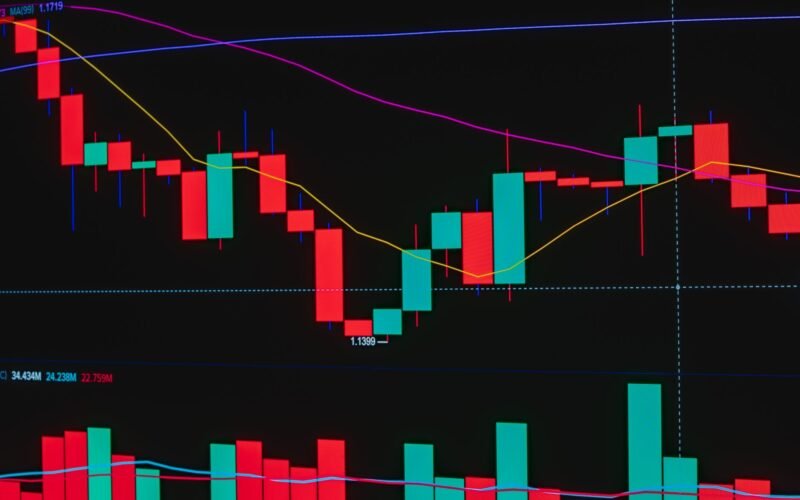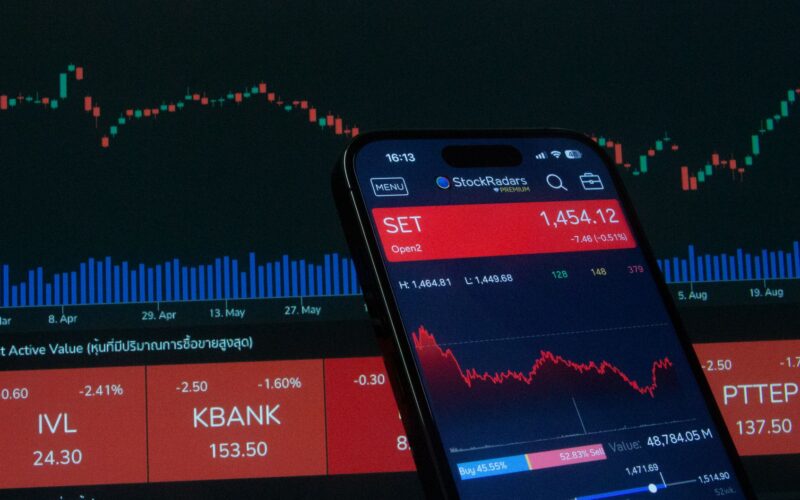


TL;DR: Market orders execute immediately at the best available price, limit orders let you set a specific price or better, and stop-loss orders help protect against potential losses by triggering a trade when a certain price is reached.
Key Stats at a Glance:
- NSE average daily trading volume: Over ₹15,000 crore (as of early 2024).
- BSE has over 6,000 listed companies.
- Nifty 50 has historically provided an average annual return of approximately 12-14%.
- SEBI mandates risk management controls for all trading members.
- Over 80% of retail traders face significant challenges with order execution precision.
What are Order Types in Trading?
Order types are specific instructions given to a broker to buy or sell a financial instrument, dictating the conditions under which the trade should be executed.
In the dynamic Indian stock market, powered by exchanges like NSE and BSE, understanding how to place orders is as critical as selecting the right stock. Your chosen order type directly impacts the price you get, the speed of execution, and your overall risk exposure. For instance, failing to set a stop-loss can turn a small paper loss into a significant financial hit, especially in volatile sessions. Finovatives.com offers advanced tools like our Trend Traders Tool, which integrates seamlessly with TradingView indicators to help traders make informed decisions, including when and how to deploy different order types.
Brokers facilitate these instructions electronically, ensuring they reach the exchange’s matching engine. The most fundamental order types traders encounter are Market Orders, Limit Orders, and Stop-Loss Orders. Each serves a distinct purpose, catering to different trading strategies and risk appetites.
What is a Market Order and When Should You Use It?
A market order is an instruction to buy or sell a security immediately at the best available current price on the exchange.
Market orders are the simplest and most common type. They prioritize speed and certainty of execution over price. When you place a market order, your broker will attempt to fill it instantly using the prevailing bid (for selling) or ask (for buying) price. This is ideal when your primary goal is to enter or exit a position as quickly as possible, and you are less concerned about minor price discrepancies. For example, if you’re trading a highly liquid stock like Reliance Industries on the NSE and need to exit immediately due to breaking news, a market order ensures your sale happens without delay. However, in fast-moving markets or for less liquid stocks, the execution price might differ significantly from the last traded price, a phenomenon known as ‘slippage’.
Pros and Cons of Market Orders
- Pros: Guaranteed execution, fastest way to enter or exit a trade.
- Cons: No control over the execution price, potential for significant slippage in volatile markets or with illiquid stocks.
Using a market order for entry in a fast-rising stock can mean paying a higher price than anticipated, while using it for exit during a sharp decline can mean selling for less than you expected. Always consider market conditions before opting for a market order.
What is a Limit Order and How Does It Work?
A limit order allows you to set a specific price at which you are willing to buy or sell a security, ensuring you never pay more than your limit price when buying, or sell for less than your limit price when selling.
Limit orders provide price control. When you place a buy limit order, it will only execute at your specified price or lower. Conversely, a sell limit order will only execute at your specified price or higher. This is invaluable for traders who want to buy a stock only if it dips to a certain level or sell it once it reaches a target profit. For instance, if Infosys is trading at ₹1,500 and you want to buy it only if it corrects to ₹1,450, you would place a buy limit order at ₹1,450. Similarly, if you hold a stock and want to sell it once it hits ₹1,600 for a profit, you’d place a sell limit order at ₹1,600. The trade-off for price control is that your order might not be executed if the market price never reaches your specified limit price within the order’s validity period.
Limit orders are particularly useful for swing traders or positional traders who have specific entry and exit price targets and are not in a rush to execute. They help in disciplined trading by enforcing pre-determined entry and exit points, aligning with strategic investment goals.
Types of Limit Orders
- Buy Limit: Placed below the current market price to buy at a lower price.
- Sell Limit: Placed above the current market price to sell at a higher price.
Many brokers allow you to set the validity of your limit order, such as ‘Day Only’ (valid only for the current trading day) or ‘Good Till Cancelled’ (GTC), which remains active until you manually cancel it or it’s executed. For active traders, understanding the nuances of order validity is as important as the limit price itself.
What is a Stop-Loss Order?
A stop-loss order is a type of limit order or market order placed with a broker to buy or sell a security when the price reaches a certain predetermined level, intended to limit an investor’s loss on a security position.
Stop-loss orders are a cornerstone of risk management in trading. They are designed to automatically exit a losing trade before the loss becomes too substantial. When you buy a stock, you place a stop-loss order below its current price. If the stock price falls to or below this level, the stop-loss order is triggered and becomes a market order (or sometimes a limit order, depending on the type of stop order chosen) to sell. For example, if you bought a stock at ₹100 and set a stop-loss at ₹90, your broker will automatically place a sell order if the stock price drops to ₹90 or below. This prevents a potential fall to ₹70 or ₹60 from decimating your capital.
Conversely, a stop-loss can also be used to protect profits on a rising stock (often called a ‘trailing stop-loss’, which moves with the price). However, it’s crucial to understand that a stop-loss order does not guarantee execution at the exact stop price. In a rapidly falling market, your stop-loss order might be executed at a price significantly lower than your set stop level, similar to slippage with market orders.
How to Use Stop-Loss Orders Effectively
- Determine your risk tolerance: Decide how much you are willing to lose per trade or on a specific stock.
- Set a logical stop price: Base your stop price on technical analysis (e.g., below a support level) rather than an arbitrary percentage.
- Avoid placing stops too close: A stop that is too tight can be triggered by normal market fluctuations, causing you to exit a trade prematurely.
- Avoid placing stops too far: A stop that is too wide defeats the purpose of limiting losses.
- Review and adjust: Periodically review your stop-loss levels, especially if the stock’s fundamentals or market conditions change. For a long position, consider a trailing stop-loss to lock in profits as the price rises.
How Does a Stop-Limit Order Work?
A stop-limit order combines the features of a stop order and a limit order, allowing traders to specify both a trigger price and a limit price.
This order type is used to gain more control over the execution price when a stop price is reached. When the security reaches the ‘stop price’, it triggers a limit order. However, the limit order will only execute at the ‘limit price’ or better. This means that if the price gaps beyond your limit price after the stop is triggered, the order may not be filled. For instance, if a stock hits ₹50 (your stop price) and triggers a stop-limit order with a limit price of ₹49.50, it will attempt to sell at ₹49.50 or higher. If the price immediately plummets to ₹48 after hitting ₹50, your sell order at ₹49.50 might not execute, leaving you still holding the stock but potentially facing further losses.
Stop-limit orders offer enhanced price protection compared to stop-loss orders (which become market orders), but they introduce the risk of non-execution if the market moves too rapidly past your limit. They are best suited for situations where avoiding a specific adverse price is paramount, and you are willing to accept the risk of not exiting the trade if the market moves too quickly.
How to Choose the Right Order Type for Your Trade
Selecting the appropriate order type depends heavily on your trading strategy, market conditions, and risk tolerance. Here’s a practical approach for Indian retail traders:
- For immediate entry/exit: Use a Market Order when speed is paramount and you’re trading highly liquid stocks (like those in the Nifty 50) where slippage is minimal. Be aware of the risk, especially during news events or market open/close.
- For price control on entry: Use a Buy Limit Order when you want to buy a stock only if it pulls back to a specific, lower price. This ensures you don’t overpay and allows disciplined accumulation.
- For price control on exit (profit taking): Use a Sell Limit Order when you have a profit target in mind. It ensures you sell at your desired price or better, locking in gains.
- For risk management (limiting losses): Use a Stop-Loss Order (which triggers a market order) when you want to exit a losing trade automatically to prevent further damage. Set it based on technical support levels or your maximum acceptable loss.
- For controlled exit with price protection: Use a Stop-Limit Order when you want to limit losses but also want to avoid selling at a price significantly worse than your stop trigger. Understand the risk of non-execution.
- Consider order validity: Ensure your order (especially limit or stop-limit) is set to ‘Day’ or ‘Good Till Cancelled’ (GTC) according to your strategy’s timeframe.
- Practice with virtual money: If you’re unsure, use paper trading or a ‘free trial’ on platforms that offer simulated trading to practice with different order types without risking real capital.
- Use advanced tools: Leverage tools like TradingView indicators or specialised platform features that can alert you when prices approach your desired levels, helping you decide on the best order type.
Frequently Asked Questions
What is the difference between a stop-loss and a stop-limit order?
A stop-loss order becomes a market order when triggered, executing at the best available price, which might be worse than your stop price. A stop-limit order becomes a limit order when triggered, executing only at your limit price or better, but risking non-execution if the price moves too fast.
Can a stop-loss order guarantee my exit price?
No, a stop-loss order does not guarantee execution at the exact stop price. In fast-moving markets, it can be executed at a significantly different price due to slippage.
When should I use a market order over a limit order?
Use a market order when immediate execution is more important than the exact price, typically for highly liquid stocks where slippage is minimal. Use a limit order when price certainty is crucial and you can wait for your specified price.
What happens if the market price never reaches my limit order price?
If the market price never reaches the price specified in your limit order, the order will expire unexecuted (at the end of its validity period, e.g., end of day or if GTC is cancelled).
Is it better to use a stop-loss or a stop-limit order?
It depends on your priority. If limiting losses is paramount and you need to exit no matter what, use a stop-loss. If avoiding a specific bad price is more important than guaranteed execution, use a stop-limit, accepting the risk of not exiting.
How do exchanges like NSE and BSE handle order execution?
NSE and BSE use sophisticated electronic matching engines that pair buy and sell orders based on price and time priority. Market orders are matched instantly, while limit orders wait for a matching counterparty at or better than the specified price.
Disclaimer: Investing in the stock market involves risks. Please consult with a qualified financial advisor before making any investment decisions.






 Finovatives