

Understanding Stop Loss Orders: A Trader’s Essential Tool
The Indian stock market, with its vibrant energy and occasional volatility, presents incredible opportunities. However, for every success story, there are countless tales of unexpected losses. This is where a fundamental risk management tool comes into play: the stop loss order. As a seasoned trader and content creator for Finovatives.com, I’ve seen firsthand how mastering stop loss orders can be the difference between a thriving trading career and consistent disappointment. This article will delve deep into setting stop loss orders effectively within the Indian context, drawing upon principles endorsed by SEBI and practical market wisdom.
A stop loss order is essentially a pre-determined instruction given to your broker to automatically sell a security when it reaches a specific price. Its primary purpose is to limit potential losses on a trade. Imagine you buy shares of Reliance Industries at ₹2,800, and you believe the stock is poised to rise. However, you also recognise the risk. You might place a stop loss order at ₹2,700. If the stock price falls to ₹2,700, your stop loss order triggers, and your shares are sold, limiting your loss to ₹100 per share. Without this, the stock could continue to fall, leading to much larger financial damage.
In India, SEBI (Securities and Exchange Board of India) mandates clear guidelines for trading, and understanding how stop loss orders fit into this regulatory framework is paramount. While SEBI doesn’t dictate *how* you should set your stop loss, it encourages robust risk management practices among market participants. The National Stock Exchange (NSE) and the Bombay Stock Exchange (BSE) facilitate the execution of these orders, making them an integral part of daily trading operations for millions of Indian investors and traders.
Why Stop Loss Orders are Non-Negotiable in Indian Trading
The Indian market is influenced by a myriad of factors – global economic trends, domestic policy changes, corporate earnings, and even geopolitical events. This inherent volatility means that even fundamentally strong stocks can experience sharp price swings. Relying solely on hope or intuition when a trade moves against you is a recipe for disaster. Stop loss orders act as a disciplined safeguard, ensuring that emotions don’t dictate financial decisions.
Consider the Nifty 50, India’s benchmark stock market index. On days of significant news, the Nifty can move hundreds of points. If you are long on an index futures contract and a sudden adverse event occurs, a stop loss order can prevent catastrophic equity erosion. Similarly, for individual stocks, a well-placed stop loss can protect your capital during unexpected downturns. Without it, a single bad trade could wipe out the profits from several good ones, severely impacting your overall portfolio performance and mental peace.
Furthermore, stop loss orders facilitate the concept of defined risk. This means you know exactly how much you stand to lose on a particular trade before you even enter it. This clarity is essential for effective capital allocation and position sizing. If you are trading with a fixed capital amount, say ₹1,00,000, and you decide that you will not risk more than 2% of your capital on any single trade (₹2,000), a stop loss order helps you achieve this by determining the maximum number of shares you can buy based on your entry price and stop loss level.
The Psychology of Emotional Trading and How Stop Loss Helps
Human psychology is a significant factor in trading. Fear and greed are powerful emotions that can lead to irrational decisions. When a trade starts losing money, traders often hold on, hoping for a reversal, a phenomenon known as ‘loss aversion’. Conversely, when a trade is profitable, they might exit too early fearing they’ll lose their gains. Stop loss orders provide an objective exit point, removing the emotional burden of deciding when to cut losses. This discipline is crucial for long-term success in markets like the NSE and BSE.
Types of Stop Loss Orders Available in India
While the basic concept is the same, there are variations of stop loss orders that traders can utilise:
- Standard Stop Loss Order: As explained, this is a fixed price at which you want to exit.
- Stop Loss Limit Order: This order combines a stop loss trigger with a limit order. When the trigger price is reached, a limit order is placed at a specified limit price or better. This can prevent slippage (executing at a worse price than intended), but it also means the trade might not execute if the market moves too quickly past the limit price.
- Trailing Stop Loss: This is a dynamic stop loss that moves with the price of the security in your favour but stays put if the price moves against you. For instance, if you buy a stock at ₹100 and set a trailing stop loss of 5% (₹5), it will initially be ₹95. If the stock rises to ₹110, the trailing stop loss automatically adjusts to ₹105 (5% of ₹110). If the stock then falls to ₹108, the stop loss remains at ₹105, protecting your gains. This is particularly useful in trending markets.
Practical Strategies for Setting Effective Stop Loss Levels
Setting a stop loss isn’t about picking a random number. It requires a strategic approach based on technical analysis, market conditions, and your personal risk tolerance. Here are some effective methods:
1. Based on Technical Analysis Levels
Technical indicators and chart patterns provide objective reference points for setting stop losses. Traders often use:
- Support and Resistance Levels: For a long position, place your stop loss just below a significant support level. For a short position, place it just above a resistance level. For example, if a stock like ITC has a strong support at ₹400, and you buy it at ₹410 expecting an uptrend, you might set your stop loss at ₹395, giving the stock some room below the support.
- Moving Averages (MAs): Traders often use MAs like the 50-day or 200-day MA as dynamic support or resistance. If a stock is trading above its 50-day MA and shows an uptrend, a stop loss can be placed below this MA.
- Average True Range (ATR): ATR measures market volatility. You can use a multiple of the ATR to set your stop loss. For instance, if a stock’s ATR is ₹10, you might set a stop loss at 1.5x or 2x ATR below your entry price. This adapts the stop loss to the stock’s current volatility.
- Chart Patterns: The breakout point of a bullish pattern (like a symmetrical triangle) can serve as a reference. If the price reverses and falls back below the breakout point, it might signal a false breakout, and your stop loss could be triggered.
2. Percentage-Based Stop Loss
This is a straightforward method where you decide a fixed percentage of your entry price at which you will exit. A common rule of thumb is 5-10% for swing trading, but this can vary significantly based on the asset’s volatility and your trading style. For instance, if you buy Infosys at ₹1,500 and decide on a 5% stop loss, it would be ₹75, meaning your stop loss order would be at ₹1,425.
Caution: While simple, a fixed percentage might not always align with the stock’s underlying support/resistance structure or volatility. It’s often best used in conjunction with other methods.
3. Time-Based Stop Loss
Sometimes, a trade simply doesn’t work out as expected, even if the price hasn’t hit your predetermined stop loss level. A time-based stop loss means you exit a position if it hasn’t moved in your favour within a specific timeframe. For example, if you enter a trade expecting a quick move and it remains stagnant for 3-4 days, you might decide to exit to free up capital for better opportunities. This is more subjective and depends heavily on your trading strategy and market outlook.
Understanding Slippage and How to Mitigate It
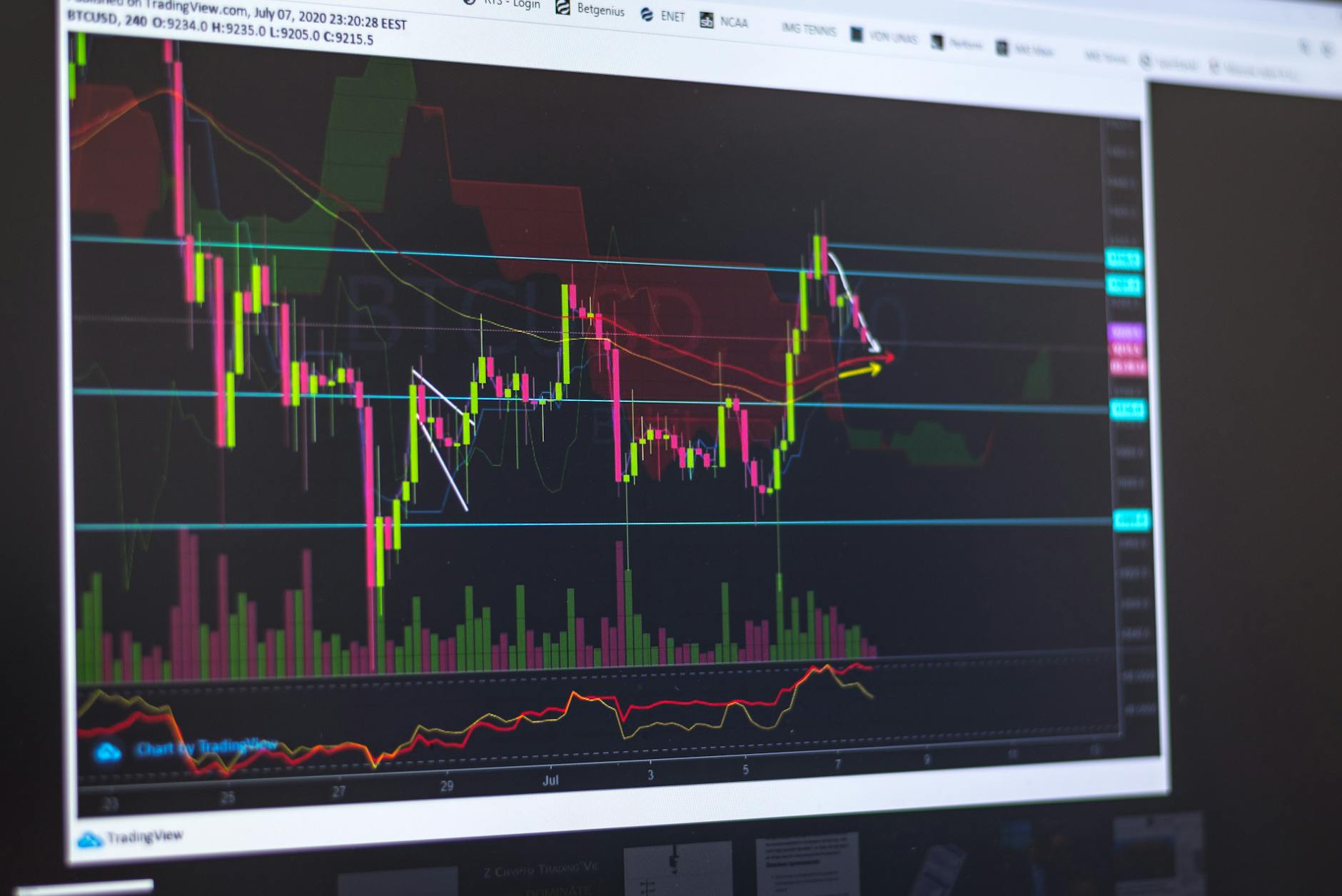
Slippage occurs when the execution price of your stop loss order differs from the trigger price. This is common in highly volatile markets or when there’s a significant news event causing rapid price movements. Your stop loss might trigger at ₹2,700, but due to a lack of buyers at that exact price, your order might get executed at ₹2,680.
Mitigation strategies include:
- Using Stop Loss Limit Orders: As mentioned, this can help, but with the risk of non-execution.
- Placing Stops Away from Key Levels: Avoid placing your stop loss exactly at a round number or a major support/resistance level, as these are often crowded with orders, increasing the chance of slippage. Give it a small buffer.
- Trading Liquid Stocks: Stocks and derivatives with high trading volumes (like those in the Nifty 50 or popular F&O scrips) generally have tighter bid-ask spreads and lower slippage.
- Avoiding Trading During Major News Events: If you are particularly risk-averse, consider not entering new positions or exiting existing ones before major announcements like RBI policy meetings or significant economic data releases, which can cause extreme volatility.
The Role of Stop Loss in Different Trading Styles
The way you set your stop loss will vary significantly depending on your trading horizon and strategy:
- Intraday Trading: Day traders typically use tighter stop losses, often based on short-term support/resistance, volatility (e.g., using a fraction of the day’s range), or a small percentage (1-2%) of the trade value. The goal is to capture small moves and exit quickly if the trade doesn’t work.
- Swing Trading: Swing traders hold positions for a few days to a few weeks. They tend to use wider stop losses, often placed below significant technical levels (like swing lows) or using a larger ATR multiple, allowing the trade more room to breathe and avoid getting stopped out by minor fluctuations.
- Long-Term Investing: While traditional buy-and-hold investors might not use stop losses as frequently, they can still be valuable. A long-term investor might place a stop loss below a critical long-term support level or a major moving average (like the 200-day MA). If this level breaks, it might signal a fundamental change in the company’s outlook, prompting a review even for a long-term holding. For instance, if a fundamentally sound company like HDFC Bank breaks its 200-day MA decisively on high volume, it might be a signal to reassess the investment thesis.
Adjusting Stop Losses Dynamically
As a trade progresses, your stop loss strategy should evolve. Once a trade moves into profit, you have two primary options:
- Move the Stop Loss to Breakeven: As soon as the trade is profitable by a small margin (e.g., enough to cover brokerage and taxes), move your stop loss to your entry price. This eliminates the risk of losing money on the trade.
- Implement a Trailing Stop Loss: As discussed earlier, this allows you to lock in profits while still giving the trade room to grow. This is often the preferred method for capturing larger trends.
The key is to avoid moving your stop loss further away from your entry price if the trade is losing money. This is a common emotional mistake that leads to significantly larger losses. Stick to your initial plan.

Common Mistakes to Avoid When Setting Stop Losses
Even with the best intentions, traders often make mistakes that undermine the effectiveness of their stop loss orders:
- Setting Stops Too Tight: This leads to being stopped out by normal market noise, only to see the trade move in your intended direction afterwards.
- Setting Stops Too Wide: This defeats the purpose of risk management, exposing you to potentially large losses that could significantly damage your capital.
- Moving Stops in the Wrong Direction: Widening the stop loss on a losing trade is a cardinal sin in trading.
- Not Having a Stop Loss at All: The most significant mistake. This is akin to driving a car without brakes.
- Ignoring Support/Resistance: Placing stops arbitrarily without considering market structure can lead to premature exits or excessive risk.
- Emotional Placement: Setting stops based on what you *want* to lose rather than what the market is indicating you *should* risk.
Key Takeaways
- Stop loss orders are essential risk management tools in the Indian stock market to limit potential losses.
- They help remove emotional decision-making by providing pre-defined exit points.
- Effective stop loss placement relies on technical analysis (support/resistance, MAs, ATR), percentage rules, or time horizons.
- Understanding and mitigating slippage is crucial, especially in volatile conditions.
- Stop loss strategies should be adapted to different trading styles: intraday, swing, and long-term investing.
- Dynamically adjusting stop losses to breakeven or using trailing stops is vital for protecting profits.
- Avoid common mistakes like setting stops too tight/wide, moving them incorrectly, or not using them at all.
Mastering the art of setting stop loss orders is a continuous learning process. By incorporating these strategies into your trading routine and consistently adhering to your risk management plan, you can significantly improve your chances of success in the dynamic Indian stock market. Remember, capital preservation is the first step towards profitability.
Disclaimer: Trading in the Indian stock market involves substantial risk and is not suitable for all investors. The information provided in this article is for educational purposes only and should not be considered as financial advice. Always conduct your own research and consult with a qualified financial advisor before making any investment decisions. Past performance is not indicative of future results.
Frequently Asked Questions
What is a stop loss order in the Indian stock market?
A stop loss order in India is an instruction to your broker to automatically sell a stock when it reaches a pre-set lower price. It's a crucial risk management tool designed to limit potential losses on a trade, protecting your capital from significant downturns on exchanges like the NSE and BSE.
How do I set a stop loss for stocks on NSE/BSE?
You set a stop loss by specifying a trigger price when placing your buy or sell order through your stockbroker. For example, if you buy a stock at ₹100, you might set a stop loss at ₹95. If the price drops to ₹95 on the NSE or BSE, your sell order is automatically triggered.
What is the difference between a stop loss and a limit order in India?
A stop loss order triggers a market order (or sometimes a limit order) once a specific price is hit to *limit losses*. A limit order, conversely, allows you to buy or sell at a specific price or better, ensuring you don't pay more than you want or sell for less than you want, but doesn't guarantee execution.
Can a stop loss order guarantee the exact selling price in India?
No, a stop loss order does not guarantee the exact selling price. Once triggered, it becomes a market order, and your shares will be sold at the next available market price. In a fast-moving or volatile market on the NSE/BSE, this price could be slightly different from your trigger price.
How much percentage should I use for stop loss in Indian stocks?
There's no fixed percentage; it depends on your risk tolerance, the stock's volatility, and your trading strategy. Many traders use 1-2% for short-term trades, while others might use a wider stop based on technical analysis levels like support/resistance or average true range (ATR) on NSE/BSE.





 Finovatives