



TL;DR: Identifying multibagger stocks in the Indian market involves analysing companies with strong fundamentals, scalable business models, and favourable industry tailwinds, supported by technical breakout patterns and disciplined risk management.
Key Stats at a Glance:
- Nifty 50’s historical average annual return: ~12%
- Number of listed companies on NSE: 4,000+
- Average PE expansion for successful multibaggers: 20x to 50x+
- SEBI’s regulatory framework ensures market integrity for investors
- Average time to identify a multibagger: 3-5 years of patient observation and analysis
What is a Multibagger Stock?
A multibagger stock is an equity investment that provides returns of more than 100%, effectively multiplying the initial investment multiple times (e.g., a 2-bagger is 100% return, a 3-bagger is 200% return, and so on). The term was popularised by investor Peter Lynch, signifying exceptionally high-performing stocks that significantly outperform the broader market over an extended period.

How to Identify Multibagger Stocks in India?
Identifying multibagger stocks requires a systematic approach that combines in-depth fundamental analysis with an understanding of market dynamics and technical indicators specific to the Indian context. It’s about finding companies with the potential for exponential growth, not just incremental gains.
1. Strong Fundamental Analysis
The bedrock of identifying potential multibaggers lies in scrutinising a company’s financial health and business prospects. Look for consistent revenue and profit growth, healthy profit margins, manageable debt levels, and robust cash flow generation. Companies with a competitive advantage, such as a strong brand, patented technology, or dominant market share, are often prime candidates.
a. Financial Ratios to Watch
Key financial ratios provide a quantitative lens. Focus on a rising Return on Equity (ROE) and Return on Capital Employed (ROCE), ideally above 15-20%. Debt-to-equity ratio should be low, indicating financial stability. Earnings Per Share (EPS) growth should be consistently positive and accelerating. A healthy operating profit margin (OPM) suggests pricing power and operational efficiency. For instance, a company consistently growing its OPM while expanding its revenue base is a strong signal.
b. Business Model Scalability
A scalable business model is crucial. This means the company can significantly increase its revenue without a proportional increase in costs. Digital-first businesses, franchise models, or companies operating in rapidly expanding sectors often exhibit high scalability. Evaluate if the company’s products or services have a large addressable market and can be expanded geographically or into new product lines with relative ease.
2. Sectoral Tailwinds and Industry Analysis
Multibaggers often emerge from sectors experiencing significant growth or disruption. Analyse macroeconomic trends, government policies, and technological advancements that favour specific industries. For example, the renewable energy, electric vehicles, or digital services sectors in India are currently beneficiaries of strong sectoral tailwinds.
a. Understanding Industry Growth Potential
Research the total addressable market (TAM) for the industry. Is it expanding? Are there regulatory tailwinds, such as government incentives or favourable policies, as seen with PLI schemes in manufacturing? Companies in sunrise sectors with limited competition initially have a higher probability of becoming multibaggers.
b. Competitive Landscape and Moat
Assess the competitive intensity. A company with a strong ‘moat’—a sustainable competitive advantage—is less susceptible to price wars and competitive pressures. This could be due to strong brand loyalty, high switching costs for customers, network effects, or cost advantages. A business that can fend off competitors effectively is more likely to sustain its growth trajectory.

3. Management Quality and Corporate Governance
The quality of a company’s management team is paramount. Look for experienced, ethical leadership with a proven track record and a clear vision for the future. Strong corporate governance practices, transparency in financial reporting, and alignment of management interests with shareholders (e.g., through reasonable promoter holdings) are critical indicators.
a. Evaluating Promoter Integrity
The background and past actions of the promoters or founders can reveal much about their integrity and commitment. Check for any history of regulatory issues or related-party transactions that seem exploitative. A management team that consistently communicates its strategy and performance transparently builds investor confidence.
b. Shareholding Patterns
An increasing stake held by institutional investors (FIIs, DIIs) and a stable or increasing promoter holding can be positive signs. A high percentage of institutional ownership often indicates confidence from experienced market participants. Conversely, a consistently decreasing promoter stake might signal a lack of confidence or intent to dilute.
4. Technical Analysis for Entry and Exit Points
While fundamentals drive long-term value, technical analysis helps in timing entries and exits. Identifying stocks that are breaking out from long-term consolidation patterns, showing strong volume support, and exhibiting positive moving average crossovers can signal the start of a significant upward move.
a. Chart Patterns and Indicators
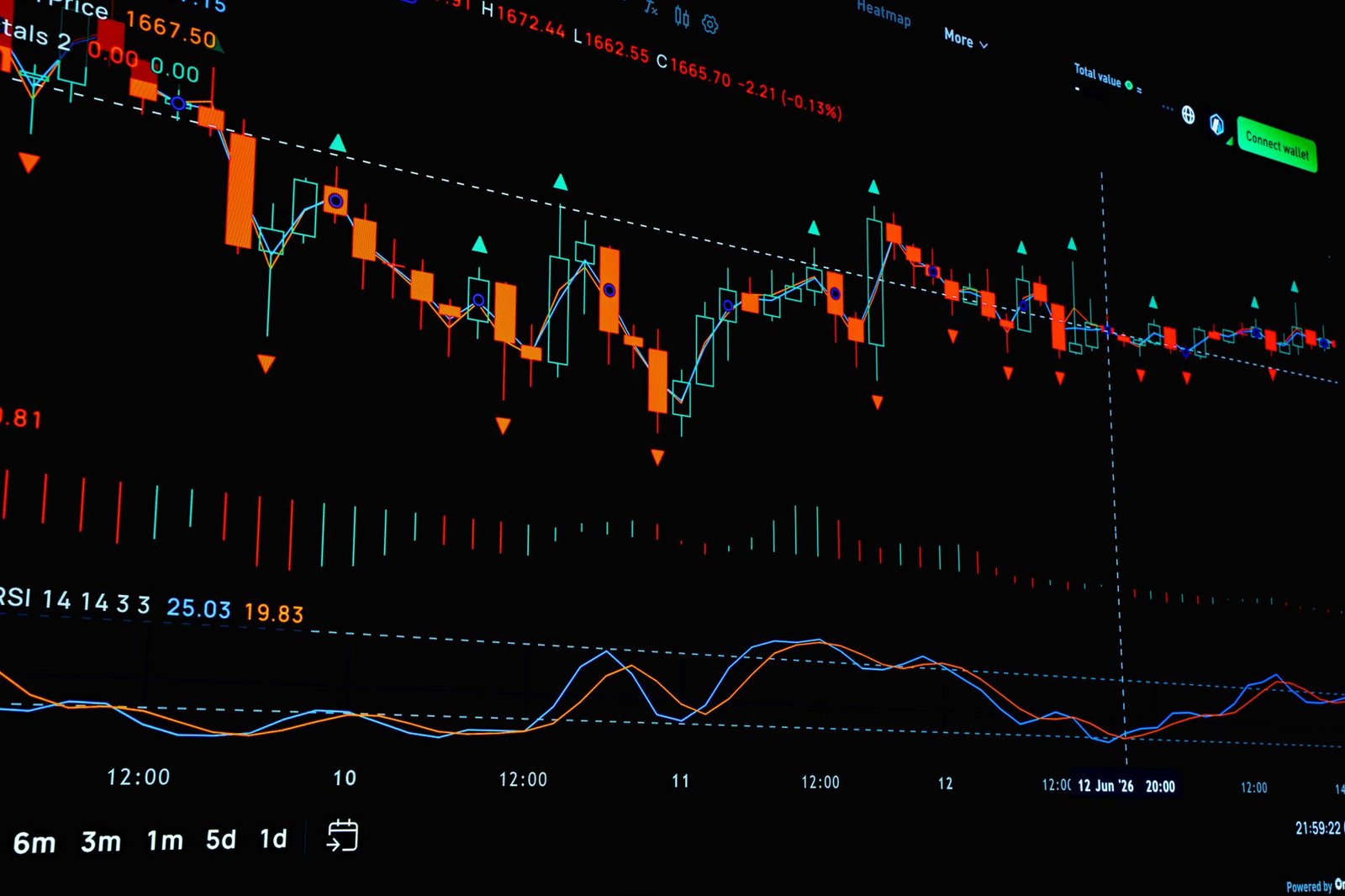
Look for classic bullish patterns like ascending triangles, flag patterns, or cup-and-handle formations on daily, weekly, and monthly charts. Indicators like the Relative Strength Index (RSI) moving above 50 and showing bullish divergence, or the MACD crossing above its signal line, can confirm upward momentum. Using a robust TradingView indicator can streamline this process.
b. Volume Analysis
A significant increase in trading volume accompanying a price breakout is a strong confirmation signal. High volume suggests strong conviction behind the price move. Avoid stocks where price is rising on low volumes, as these moves may not be sustainable.
How to Invest in Potential Multibaggers
- Screen for Potential Candidates: Use stock screeners with criteria like high ROE/ROCE, consistent sales/profit growth, low debt, and positive industry trends. Filter by market capitalisation if you prefer large-caps or mid-caps.
- Conduct Deep Fundamental Research: Analyse financial statements for at least 5-10 years. Understand the company’s competitive advantage, management quality, and future growth drivers. Read annual reports thoroughly.
- Assess Sectoral Outlook: Ensure the company operates in a sector with favourable long-term growth prospects, supported by economic or policy factors.
- Evaluate Management and Governance: Investigate the promoter’s background, corporate governance record, and shareholder communication.
- Use Technical Analysis for Entry: Wait for technical confirmation of an uptrend, such as a breakout from a base with strong volume, before initiating a position. Consider using tools like Finovatives’ Trend Traders Tool for better insights.
- Start with a Small Position: Begin with a smaller investment to limit downside risk, especially if conviction is not yet 100%.
- Average Cautiously on Dips: If the fundamental story remains intact, consider adding to your position during market corrections or temporary price dips.
- Monitor Continuously and Be Patient: Regularly review the company’s performance and industry trends. Multibaggers take time to mature, often years. Avoid impulsive selling based on short-term volatility.

Risks and Considerations
Investing in potential multibaggers inherently carries significant risk. Many small-cap and mid-cap companies, which often turn out to be multibaggers, are more volatile and prone to business failure than large-caps. Regulatory changes, intense competition, or poor execution by management can quickly derail growth prospects. It is crucial to diversify your portfolio and never invest money you cannot afford to lose. Thorough due diligence is non-negotiable.
Frequently Asked Questions
What is the typical holding period for a multibagger stock?
The holding period for a multibagger stock is typically long-term, often spanning 5 to 10 years or even more, allowing the company’s growth story to fully unfold and compound returns.
Are multibagger stocks found only in small-cap segments?
While many multibaggers originate from the small-cap or mid-cap segments due to higher growth potential, large-cap companies with exceptional innovation or market dominance can also deliver multibagger returns over very long periods.
How important is PE ratio in identifying multibaggers?
The Price-to-Earnings (PE) ratio is important but should not be the sole criterion. A high PE might indicate high growth expectations. A multibagger often starts with a reasonable PE that expands significantly as its growth outpaces earnings, or it might have a low PE that expands as the market recognises its true potential.
Can technical analysis alone identify multibaggers?
Technical analysis is primarily a tool for timing entries and exits. It can confirm bullish sentiment and breakout patterns but cannot identify the underlying fundamental strength and long-term growth potential that truly define a multibagger stock.
What role does SEBI play in protecting multibagger investments?
SEBI (Securities and Exchange Board of India) plays a crucial role by setting regulatory frameworks, ensuring corporate governance standards, and overseeing market operations to protect investor interests, thereby providing a safer environment for identifying and holding potential multibagger stocks.

Is it better to invest in IPOs for multibagger potential?
IPOs can offer multibagger potential if the company is fundamentally strong and the valuation is attractive. However, they also carry higher risks due to limited historical data and potential overvaluation by the market.
Key Takeaways:
- Multibaggers offer exponential returns but require deep research and patience.
- Focus on companies with scalable business models and strong competitive advantages.
- Sectoral tailwinds and quality management are critical growth enablers.
- Technical analysis aids in optimal entry and exit timing, complementing fundamental research.
- Diversification and disciplined risk management are essential due to inherent volatility.
- Always conduct thorough due diligence before investing.
- Long-term holding periods are typically required for maximum wealth creation.
Investing in the stock market involves risks. This information is for educational purposes only and not financial advice.






 Finovatives