



Unlocking Profits: Effective Swing Trading Strategies for NSE Stocks
The Indian stock market, with its vibrant exchanges like the National Stock Exchange (NSE) and Bombay Stock Exchange (BSE), offers a dynamic landscape for traders. For many retail participants, the allure lies in short-to-medium term gains, and swing trading emerges as a popular and potentially lucrative approach. Unlike day trading, which focuses on intra-day price movements, or long-term investing, swing trading aims to capture price ‘swings’ that typically last a few days to a few weeks. This strategy bridges the gap, allowing traders to benefit from market volatility without the constant screen monitoring required for day trading, and with a shorter horizon than traditional investing.
Swing trading in the Indian context, particularly on the NSE, demands a blend of technical acumen, psychological discipline, and a keen understanding of market dynamics. The NSE, being the leading stock exchange in India, lists a vast array of companies across diverse sectors, providing ample opportunities for swing traders. However, success isn’t guaranteed; it requires a systematic approach, robust risk management, and continuous learning. This article delves into effective swing trading strategies that have proven their worth in the Indian stock market, equipping you with the knowledge to navigate these opportunities.
Understanding the Core of Swing Trading on the NSE
Swing trading operates on the principle that stock prices move in predictable patterns or ‘swings’. These swings are driven by a combination of market sentiment, news events, economic data, and the ebb and flow of supply and demand. A swing trader seeks to identify an emerging trend and hold a position until the momentum begins to wane, then exit to book profits. The goal is to capture a significant portion of a price move, rather than the entire trend. For instance, a stock might undergo a sharp correction and then begin to consolidate. A swing trader might enter a long position anticipating a bounce back to previous highs, or a retracement to a Fibonacci level.
The NSE, with its high liquidity in many popular stocks like Reliance Industries, HDFC Bank, or Infosys, often presents clear trending phases and consolidation periods that are ideal for swing trading. The Securities and Exchange Board of India (SEBI) regulations ensure a fair and transparent market, which is crucial for traders relying on technical indicators. Understanding chart patterns, support and resistance levels, and momentum indicators are foundational to this trading style. The ideal holding period for a swing trade can range from a couple of days to several weeks, depending on the speed and magnitude of the price swing. This makes it more manageable for individuals who cannot dedicate their entire day to trading.
Key Technical Indicators for NSE Swing Traders
Technical analysis forms the backbone of swing trading. Traders rely on historical price and volume data to predict future price movements. Several indicators can help identify potential entry and exit points for swing trades on NSE stocks:
- Moving Averages (MAs): Simple Moving Averages (SMAs) and Exponential Moving Averages (EMAs) are widely used. A common strategy involves using a shorter-term MA (e.g., 20-day EMA) crossing over a longer-term MA (e.g., 50-day EMA) as a buy signal when the shorter MA crosses above the longer one, and a sell signal when it crosses below. For instance, a trader might look for the 20-day EMA of Bajaj Finance crossing above its 50-day EMA as a potential buy signal, anticipating an upward swing.
- Relative Strength Index (RSI): The RSI is a momentum oscillator that measures the speed and change of price movements. It oscillates between 0 and 100. Readings above 70 are typically considered overbought, suggesting a potential price reversal downwards, while readings below 30 indicate oversold conditions, suggesting a potential upward reversal. A trader might look for the RSI of Tata Motors to dip below 30, indicating oversold conditions, and then turn upwards as a signal to enter a long position.
- MACD (Moving Average Convergence Divergence): MACD is a trend-following momentum indicator that shows the relationship between two moving averages of a security’s price. It consists of the MACD line, the signal line, and a histogram. A bullish crossover occurs when the MACD line crosses above the signal line, often signaling a potential uptrend. Conversely, a bearish crossover occurs when the MACD line crosses below the signal line, indicating a potential downtrend.
- Support and Resistance Levels: These are price levels where a stock tends to stop falling (support) or stop rising (resistance). Identifying these levels helps traders set entry points (buying near support), stop-loss orders (below support), and profit targets (near resistance). For a stock like SBI, identifying a strong support around ₹500 and resistance around ₹550 would guide a swing trader’s actions.
Chart Patterns: Visual Cues for Swings
Beyond individual indicators, specific chart patterns can provide valuable insights into potential price swings. These patterns are formed by the price action of a stock over time and are often interpreted by technical analysts to predict future movements.
- Continuation Patterns: These patterns suggest that the existing trend is likely to continue after a brief pause. Examples include Flags, Pennants, and Ascending/Descending Triangles. For example, after a sharp upward move in a stock like ICICI Bank, if it forms a bullish flag pattern, it suggests the uptrend might resume, presenting a swing trading opportunity.
- Reversal Patterns: These patterns indicate that the prevailing trend is likely to reverse. Common reversal patterns include Head and Shoulders (and its inverse), Double Tops/Bottoms, and Wedges. If a stock like ITC, after a prolonged uptrend, forms a Head and Shoulders top pattern, it signals a potential bearish reversal, a signal for swing traders to consider exiting long positions or initiating short trades.
Popular Swing Trading Strategies for the Indian Market
Combining technical indicators and chart patterns allows for the development of specific swing trading strategies. Here are a few popular ones adapted for the Indian market:
1. Moving Average Crossover Strategy
This is a foundational strategy that relies on the signals generated by the intersection of two moving averages. A typical setup involves using a 20-period EMA and a 50-period EMA. The strategy is as follows:
- Entry Signal (Buy): When the 20-period EMA crosses above the 50-period EMA on a daily or hourly chart, it suggests increasing upward momentum. A trader might enter a long position, placing a stop-loss below the recent swing low or the 50-period EMA.
- Exit Signal (Sell): The trade is exited when the 20-period EMA crosses back below the 50-period EMA, indicating a potential downtrend. Alternatively, a predefined profit target based on resistance levels or a fixed risk-reward ratio can be used.
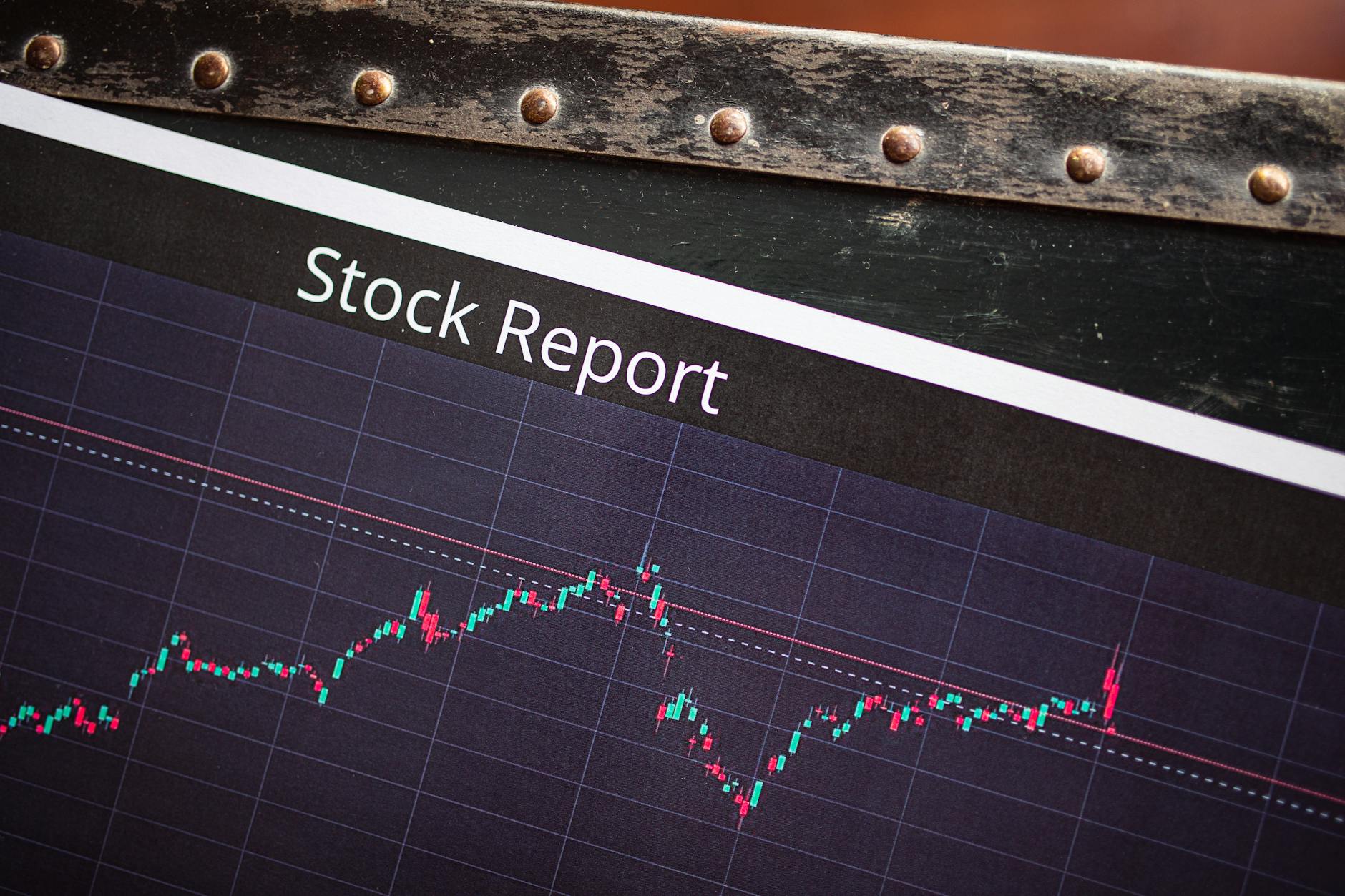
This strategy works best in trending markets. For instance, during the strong uptrend of a large-cap IT stock like Wipro in late 2023, this strategy would have generated multiple profitable buy signals. Traders must, however, be cautious of ‘whipsaws’ (false signals) in sideways or volatile markets, which can be mitigated by using additional confirming indicators like RSI or MACD.
2. Support and Resistance Breakout Strategy
This strategy capitalizes on the principle that when a price breaks through a significant support or resistance level, it often continues to move in the direction of the breakout. This is particularly relevant for stocks that have been consolidating in a tight range.
- Entry Signal (Buy): A buy signal is generated when the stock price breaks decisively above a strong resistance level, preferably on increased volume. The trader can enter a long position as the price breaks out or on a slight pullback to the broken resistance level, which now acts as support. A stop-loss is placed below the breakout level or the pullback support.
- Entry Signal (Sell/Short): A sell signal is generated when the stock price breaks decisively below a strong support level, again on increased volume. A short position can be initiated on the breakout or on a slight bounce back to the broken support level, which now acts as resistance. A stop-loss is placed above the breakout level or the pullback resistance.
This strategy requires careful observation of volume. A breakout accompanied by high volume is more likely to be genuine. For example, if a PSU bank stock like Punjab National Bank (PNB) breaks out of a long-standing resistance zone with significant volume, it could signal the start of a new upward swing. Conversely, a breakdown below a crucial support level might initiate a downward swing. This strategy aims to catch the initial momentum of the price move.
3. RSI Divergence Strategy
Divergence between the price action of a stock and an oscillator like the RSI can be a powerful indicator of a potential trend reversal. This strategy focuses on identifying these divergences.
- Bullish Divergence (Buy Signal): Occurs when the stock price makes a new low, but the RSI makes a higher low. This suggests that the downward momentum is weakening, and a potential uptrend might be starting. A swing trader might look for this on a daily chart of a stock like Adani Enterprises after a period of decline. Once the price shows signs of stabilizing and starting to move up, potentially with an RSI turning upwards from oversold levels, it could signal an entry.
- Bearish Divergence (Sell Signal): Occurs when the stock price makes a new high, but the RSI makes a lower high. This indicates that the upward momentum is fading, and a potential downtrend may be imminent. A trader might spot this on a stock like Bharti Airtel when it makes a new price high, but the RSI fails to confirm with a new high. This could be a signal to exit long positions or consider a short trade.
The RSI divergence strategy is often used in conjunction with other indicators or chart patterns to confirm the signal, as divergence alone can sometimes lead to false signals, especially in strongly trending markets.

Risk Management: The Unsung Hero of Swing Trading
No trading strategy is complete without a robust risk management plan. The NSE, like any other market, can be volatile, and even the best strategies can result in losses if not managed properly. For swing traders, risk management is paramount to preserving capital and ensuring long-term survival.
Setting Stop-Loss Orders
A stop-loss order is an instruction to your broker to sell a security when it reaches a certain price. It is the most critical tool for limiting potential losses on a trade. For swing trading, stop-losses are typically placed:
- Below a key support level for long positions.
- Above a key resistance level for short positions.
- Below the recent swing low for a long entry.
- Above the recent swing high for a short entry.
- A fixed percentage below the entry price (e.g., 2-3%), though this is less dynamic than using price levels.
For example, if you enter a long position in a stock like HDFC Bank at ₹1,450 after a breakout above resistance, you might place your stop-loss at ₹1,420, just below the breakout level. This ensures that if the breakout fails, your loss is capped.
Position Sizing
Position sizing refers to determining how much capital to allocate to a single trade. It’s not just about how many shares to buy, but how much of your total trading capital each trade represents. A common rule is to risk no more than 1-2% of your total trading capital on any single trade. This means that if your stop-loss is hit, the loss will be a small, manageable percentage of your overall funds.
For instance, if you have a trading capital of ₹5,00,000 and you decide to risk 1% per trade (₹5,000), and your stop-loss for a particular trade is ₹10 per share, you can buy a maximum of 500 shares (₹5,000 / ₹10). This prevents a single losing trade from significantly impacting your portfolio. This disciplined approach is crucial for navigating the inevitable drawdowns in the market.

Trade Management and Exit Strategy
Even with a stop-loss in place, managing a trade as it progresses is important. Swing traders should have a clear exit strategy not just for losses, but also for profits. This includes:
- Taking Partial Profits: As a trade moves favorably, consider booking a portion of the profits (e.g., 50%) when a target is reached and moving the stop-loss to breakeven for the remaining position. This locks in gains while allowing for further upside potential.
- Trailing Stop-Loss: As the trade moves into profit, the stop-loss can be ‘trailed’ upwards (for long positions) to lock in more gains. This can be done manually or using automated features offered by brokers.
- Reaching Profit Targets: Having predefined profit targets based on technical resistance levels, Fibonacci extensions, or a specific risk-reward ratio (e.g., 1:2 or 1:3) is essential.
A well-defined exit plan prevents emotional decisions during volatile market movements and ensures that profits are realized systematically. The goal is to let your winners run while cutting your losers short.

Adapting Strategies to Market Conditions
The Indian stock market, like all markets, experiences different phases: trending (uptrend or downtrend), sideways (consolidation), and high volatility. Effective swing traders adapt their strategies to suit the prevailing market conditions. While a moving average crossover strategy might perform well in a strong uptrend, it can lead to losses in a choppy, sideways market. Similarly, breakout strategies are most effective when there’s clear momentum, whereas range-bound strategies might be better suited for consolidation phases.
For example, during periods of high uncertainty, such as major election results or global economic shocks, volatility on the NSE can spike. In such times, traders might opt for strategies that involve wider stop-losses, focus on fundamentally strong stocks with clear support/resistance, or even reduce their position sizes to manage the increased risk. Conversely, in a steady bull market, breakout strategies and trend-following indicators tend to perform better. Continuous market observation and a flexible approach to strategy selection are key to consistent profitability.
Key Takeaways
- Swing trading on the NSE aims to capture short-to-medium term price swings (days to weeks) in stocks.
- Key technical indicators include Moving Averages, RSI, MACD, and identifying Support/Resistance levels.
- Chart patterns like Flags, Pennants, and Head and Shoulders can provide valuable trade signals.
- Popular strategies include Moving Average Crossovers, Support/Resistance Breakouts, and RSI Divergence.
- Robust risk management, including strict stop-loss orders and proper position sizing, is crucial for capital preservation.
- Adapting trading strategies to prevailing market conditions (trending, sideways, volatile) is vital for success.
- Continuous learning, discipline, and emotional control are essential traits for any swing trader.
Disclaimer: Trading in the stock market involves significant risk, and is not suitable for all investors. The information provided in this article is for educational and informational purposes only and should not be considered as investment advice. Past performance is not indicative of future results. Investors should conduct their own research and consult with a qualified financial advisor before making any investment decisions.
Frequently Asked Questions
What is the ideal minimum capital required for swing trading NSE stocks in India?
While there's no fixed minimum, starting with ₹25,000 to ₹50,000 allows for diversification and managing brokerage fees on NSE/BSE. This capital helps in taking multiple positions without over-leveraging, crucial for managing risk in Indian markets.
How long does a typical swing trade last on the NSE?
A swing trade on the NSE typically lasts from a few days to a couple of weeks. The aim is to capture a significant price 'swing' or move, which usually unfolds over this shorter timeframe compared to long-term investing.
Which are the best types of NSE stocks for swing trading?
Stocks with good liquidity and clear price trends on the NSE are ideal. Look for large-cap or mid-cap stocks in sectors like banking, IT, or energy that show consistent price movements and are less prone to sudden, unpredictable volatility.
What are the biggest risks in NSE swing trading for Indian traders?
Key risks include unexpected market news impacting stock prices, failure to accurately predict trend reversals, and insufficient risk management leading to substantial losses. Over-leveraging or trading illiquid NSE stocks can also be detrimental.
How can I manage risk effectively when swing trading on the NSE?
Utilize stop-loss orders to limit potential losses on each trade. Never risk more than 1-2% of your trading capital on a single NSE position. Diversifying across different stocks and sectors also helps mitigate overall risk.





 Finovatives