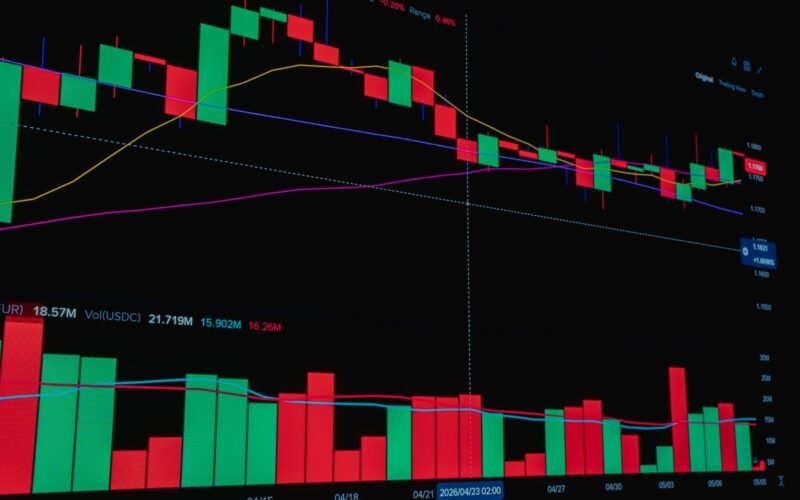



Understanding Positional Trading in the Indian Market
The Indian stock market, with its dynamic nature and a vast array of listed companies on exchanges like the National Stock Exchange (NSE) and Bombay Stock Exchange (BSE), presents numerous opportunities for traders and investors. While some favour the quick gains of intraday trading and others the slow and steady wealth accumulation of long-term investing, a significant segment of market participants thrives on positional trading. This strategy aims to capture medium-term price movements, typically lasting from a few days to several weeks or even a few months.
Positional trading acts as a bridge between short-term speculation and long-term investment. A positional trader’s objective is to ride a significant trend without being overly concerned with minor daily fluctuations. This approach requires patience, a solid understanding of technical and fundamental analysis, and robust risk management. For Indian traders, understanding how to adapt these principles to the specific nuances of the NSE and BSE, including market hours, liquidity, and prevalent trading styles, is crucial.
The Positional Trader’s Mindset
Unlike day traders who are glued to their screens, positional traders don’t need to monitor the market constantly. They focus on identifying trends and setting up trades that have the potential for substantial gains. This requires a disciplined approach, a well-defined trading plan, and the emotional fortitude to withstand short-term pullbacks within a larger trend. The Indian market, influenced by global cues, domestic economic data, and corporate earnings, often presents clear medium-term trends that positional traders can exploit.
Identifying Profitable Positional Trades
The cornerstone of successful positional trading lies in the ability to identify stocks or indices that are poised for a significant move. This involves a combination of technical and, to some extent, fundamental analysis. While positional traders are less concerned with quarterly results than long-term investors, understanding the broader economic landscape and industry trends can provide a valuable edge.
Technical Analysis Tools for Positional Traders
Technical analysis is paramount for positional traders. They primarily use charts and indicators to predict future price movements. Here are some key tools:
- Trendlines: Drawing trendlines on daily or weekly charts helps identify the direction and strength of a trend. An uptrend is characterized by higher highs and higher lows, while a downtrend shows lower highs and lower lows. Breakouts from established trendlines can signal a potential new trend. For instance, if a strong stock like Reliance Industries (RIL) shows a clear upward trendline on its weekly chart, a positional trader might look to buy on dips near this line.
- Moving Averages: Simple Moving Averages (SMAs) and Exponential Moving Averages (EMAs) are widely used to smooth out price data and identify trends. Crossovers of different moving averages (e.g., 50-day EMA crossing above 200-day EMA, often called a ‘golden cross’) can signal bullish sentiment, suggesting a potential uptrend. Conversely, a ‘death cross’ (50-day EMA below 200-day EMA) can indicate a bearish trend.
- Support and Resistance Levels: Identifying key price levels where a stock tends to stop falling (support) or stop rising (resistance) is vital. Positional traders often look to buy near support levels in an uptrend and sell near resistance levels in a downtrend.
- Chart Patterns: Patterns like triangles, flags, pennants, and head and shoulders can signal continuations or reversals of trends. For example, a bullish flag pattern on the daily chart of a stock like Tata Motors could indicate a pause before the price continues its upward journey.
- Volume Analysis: Rising volume during a price up-move or falling volume during a price down-move often confirms the strength of the trend. High volume on a breakout can signal strong conviction from market participants.
Fundamental Analysis Considerations
While not the primary focus, a basic understanding of fundamentals can add a layer of confidence. Positional traders might consider:
- Industry Trends: Is the company in a growing sector? For example, the renewable energy sector in India is currently experiencing significant growth, making stocks in this space potentially attractive for positional trades.
- Corporate Announcements: Major announcements like mergers, acquisitions, or significant new product launches can catalyze price movements.
- Overall Economic Health: Broader economic indicators released by the Indian government or the Reserve Bank of India (RBI) can influence market sentiment and sector performance.

Developing a Positional Trading Strategy
A well-defined strategy is crucial for consistency and discipline. A typical positional trading strategy might involve the following steps:
- Market Analysis: Start by assessing the overall market trend. Is the Nifty 50 or Sensex in an uptrend, downtrend, or range-bound? Trading in the direction of the broader market trend generally increases the probability of success.
- Stock Selection: Identify stocks that are showing strong trends and exhibit characteristics aligned with your technical indicators. Focus on stocks with good liquidity on the NSE and BSE to ensure ease of entry and exit.
- Entry Point: Determine the optimal entry point based on your chosen technical indicators. This could be a breakout from a resistance level, a pullback to a support or moving average, or a confirmation signal from a chart pattern.
- Setting Stop-Loss: This is arguably the most critical step. A stop-loss order limits potential losses if the trade goes against you. For positional trades, stop-losses are typically placed below a key support level or a trailing stop-loss that moves up as the price advances.
- Setting Profit Targets: Define realistic profit targets based on resistance levels, chart patterns, or risk-reward ratios. A common target might be a 2:1 or 3:1 risk-reward ratio.
- Monitoring and Adjustment: While not actively day-trading, positional traders must monitor their open positions. This might involve periodically adjusting the stop-loss to lock in profits (trailing stop-loss) or exiting the trade if the underlying trend shows signs of reversal.
Risk Management in Positional Trading
No trading strategy is complete without a robust risk management framework. Positional trading, while aiming for larger gains, also carries the risk of significant drawdowns if not managed properly. The Securities and Exchange Board of India (SEBI) regulations aim to protect investors, but individual traders must take responsibility for their risk management.
The Importance of Stop-Loss Orders
As mentioned, stop-loss orders are non-negotiable. They are your primary defence against catastrophic losses. For positional trades, a stop-loss might be placed wider than in intraday trading, reflecting the expectation of normal market volatility. However, it should still be based on logical price levels (e.g., below a significant support or a moving average) rather than an arbitrary percentage.
Consider a scenario where you buy a stock at Rs. 100, expecting it to go to Rs. 150. You might place your stop-loss at Rs. 90. If the stock falls to Rs. 90, your position is automatically closed, limiting your loss to Rs. 10 per share, regardless of how much further it might fall. This disciplined exit prevents emotional decisions and protects your capital.

Position Sizing and Capital Allocation
Another critical aspect of risk management is position sizing. You should never allocate an excessive portion of your trading capital to a single trade. A common rule is to risk no more than 1-2% of your total trading capital on any single trade. This means that if your stop-loss is Rs. 10 per share and you have Rs. 1,00,000 in your trading account, you would risk Rs. 1,000-2,000 per trade. If your stop-loss is Rs. 10, this translates to buying a maximum of 100-200 shares.
This approach ensures that even if you experience a string of losing trades, your capital remains largely intact, allowing you to continue trading and capitalize on future opportunities. For example, if a trader with a Rs. 5 Lakhs portfolio decides to risk 1% per trade (Rs. 5,000) and has a stop-loss of Rs. 20 on a particular stock, they can buy a maximum of 250 shares (Rs. 5,000 / Rs. 20). This methodical approach is vital for long-term survival in the markets.
Managing Open Positions
As your trade moves in your favour, consider using a trailing stop-loss. A trailing stop-loss is set at a certain percentage or dollar amount below the market price. If the stock price rises, the trailing stop-loss moves up with it, locking in profits. If the price reverses and hits the trailing stop-loss, your position is closed, securing your gains. This strategy allows you to participate in further upside while protecting profits already made.
Leveraging Positional Trading for Indian Investors
Positional trading can be a highly effective strategy for Indian investors looking to benefit from medium-term market trends. It offers a balance between the demands of intraday trading and the potentially slower pace of long-term investing. By mastering the art of trend identification, employing sound technical analysis, and adhering to strict risk management principles, traders can significantly enhance their profitability.
The Indian stock market offers diverse opportunities, from large-cap stocks like HDFC Bank and ICICI Bank to mid-cap and small-cap companies. Positional traders can tailor their strategy to these different market segments. For instance, mid-cap stocks often exhibit stronger trending behaviour, making them attractive targets for capturing substantial price movements. However, they also come with higher volatility, necessitating tighter risk controls.

Case Study: Positional Trade in a Nifty Component
Let’s consider a hypothetical example using a stock that is a component of the Nifty 50 index. Suppose Infosys (a prominent IT company) is trading at Rs. 1,400 and has been in a strong uptrend for several weeks, supported by positive industry outlook and strong quarterly results. A positional trader notices that the stock has broken out of a consolidation pattern (e.g., a symmetrical triangle) on the weekly chart, with increasing volume.
- Entry: The trader decides to enter the trade on the breakout, buying Infosys at Rs. 1,450.
- Stop-Loss: A logical stop-loss is placed below the breakout level and a previous minor support, say at Rs. 1,350. This gives a risk of Rs. 100 per share.
- Profit Target: Based on the measured move of the triangle pattern and previous resistance levels, the trader sets a target of Rs. 1,750. This provides a risk-reward ratio of 3:1 (Rs. 300 profit potential for Rs. 100 risk).
- Monitoring: As the stock price rises to Rs. 1,600, the trader might trail their stop-loss up to Rs. 1,500 to lock in some profit. If the price continues to Rs. 1,750, the target is hit, and the trade is exited successfully. If the price reverses and hits the trailing stop-loss at Rs. 1,500, the profit of Rs. 50 per share is secured.
This example illustrates how a structured approach, combining technical signals with a defined risk-reward framework, can lead to profitable positional trades.
Conclusion: The Art of Holding for Profit
Positional trading in the Indian stock market is a strategic approach that rewards patience, discipline, and analytical skill. It allows traders to harness medium-term trends, thereby capturing significant gains that might be missed by shorter-term strategies. By diligently applying technical analysis tools, understanding market dynamics, and implementing stringent risk management, including appropriate stop-loss levels and position sizing, Indian traders can effectively navigate the complexities of the NSE and BSE.
The key lies in developing a robust trading plan, sticking to it religiously, and continuously learning from both successful and unsuccessful trades. While no strategy guarantees profits, a well-executed positional trading approach can significantly contribute to wealth creation for the discerning Indian trader.
Key Takeaways
- Positional trading captures medium-term price trends, typically holding for days to months.
- Technical analysis tools like trendlines, moving averages, and chart patterns are crucial for identifying trade setups.
- Fundamental factors and overall market sentiment can provide additional context for positional trades.
- A strict risk management plan, including stop-loss orders and proper position sizing (e.g., risking 1-2% of capital per trade), is essential.
- Trailing stop-losses can help lock in profits as a trade moves favourably.
- Adapting strategies to the specific liquidity and volatility of Indian stocks on NSE and BSE is important.
Disclaimer: Trading in the stock market involves substantial risk of loss and is not suitable for all investors. This article is for educational purposes only and should not be considered as investment advice. Past performance is not indicative of future results. Always consult with a qualified financial advisor before making any investment decisions.
Frequently Asked Questions
What is positional trading in the Indian stock market?
Positional trading in India involves holding stocks for a few days to a few months to profit from medium-term price trends on the NSE/BSE. It bridges intraday trading and long-term investing, focusing on significant market movements rather than daily noise, aiming for substantial ₹ gains.
How do I identify good positional trading opportunities in India?
Identify opportunities by analyzing trends using technical indicators like trendlines and moving averages on daily/weekly charts. Look for stocks on NSE/BSE showing clear upward or downward momentum, potentially supported by positive fundamental factors or sector-specific news, for profitable ₹ trades.
What are the best technical indicators for positional trading in India?
Key indicators for Indian positional traders include trendlines to spot directional moves, moving averages (SMAs/EMAs) to confirm trends, MACD for momentum, and RSI to gauge overbought/oversold conditions. These help identify potential ₹ entry/exit points on NSE/BSE.
How much capital do I need for positional trading in India?
The capital needed varies greatly. Positional traders often require more than intraday traders due to holding periods. A minimum of ₹10,000-₹20,000 might be a starting point for small positions on NSE/BSE, but larger capital allows for better diversification and risk management for ₹ profits.
What is the difference between positional trading and swing trading in India?
Positional trading typically holds for weeks to months, focusing on major trends. Swing trading is shorter, usually days to weeks, capturing smaller price swings. Both use technical analysis on NSE/BSE, but positional trading aims for larger ₹ profit targets per trade.






 Finovatives