

Blog

Trading insights, strategies, and market analysis

Stock Market

Order Types Explained: Market, Limit & Stop Loss for Traders

Understanding order types like market, limit, and stop-loss is crucial for executing trades effectively on Indian stock exchanges. Choosing the right order type can significantly impact your entry and exit prices, helping you manage risk and capture opportunities.

Finovatives 10 min read

Stock Market

PE Ratio: Your Guide to Indian Stock Market Investing

The Price-to-Earnings (PE) ratio is a fundamental valuation metric that helps investors assess a stock's relative worth by comparing its share price to its earnings per share. Understanding and applying the PE ratio effectively can significantly improve your investment decision-making process in the dynamic Indian stock market.

Finovatives 8 min read
Stock Market

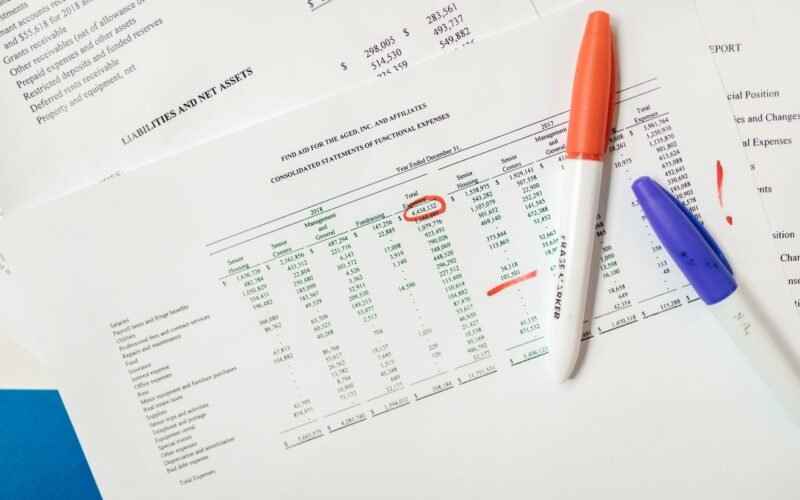
Read Financial Statements: Indian Companies Guide

Understanding a company's financial statements is crucial for astute investing. This guide breaks down how to read the Balance Sheet, Income Statement, and Cash Flow Statement for Indian businesses, empowering you with actionable insights.

Finovatives 7 min read
Finance

LTCG vs STCG: Stock Market Tax Explained for Indians

Navigating capital gains tax in India's stock market is crucial for investors. Understanding the difference between Long-Term Capital Gains (LTCG) and Short-Term Capital Gains (STCG) can significantly impact your net returns.

Finovatives 7 min read
Stock Market

PE Ratio Explained: Investing in Indian Stock Markets

The Price-to-Earnings (PE) ratio is a fundamental valuation metric used to compare a company's share price to its earnings per share. Understanding its application in Indian markets helps investors identify potentially undervalued or overvalued stocks.

Finovatives 8 min read
Finance

Section 80C Investments: Your Guide to Tax Savings in India

Section 80C of the Income Tax Act, 1961, offers a powerful avenue for Indian taxpayers to reduce their taxable income by investing in specified instruments. From equity-linked savings schemes (ELSS) to public provident funds (PPF) and national pension system (NPS), understanding these options is key to effective tax planning.

Finovatives 7 min read
Finance

Stock Market Fear & Greed: Master Your Emotions

Fear and greed are powerful emotions that can derail even the most well-laid investment plans. Understanding how these sentiments drive market cycles and developing strategies to control them is crucial for long-term success in Indian stock markets.

Finovatives 7 min read
Stock Market

PE Ratio Explained: Indian Stock Market Investing Guide

The Price-to-Earnings (PE) ratio is a fundamental valuation metric used to assess if a stock is overvalued, undervalued, or fairly priced relative to its earnings. Understanding and applying the PE ratio effectively is crucial for making sound investment decisions in the dynamic Indian stock market.

Finovatives 9 min read
Stock Market

How the Indian Stock Market Works: Beginner’s Guide

The Indian stock market, primarily driven by the NSE and BSE, allows individuals to buy and sell ownership in publicly listed companies. Understanding its core mechanisms, from trading hours to regulatory bodies like SEBI, is crucial for beginner investors seeking profitable opportunities.

Finovatives 7 min read

Ready to Start Trading Smarter?

Join thousands of traders using AI-powered signals to make better trading decisions every day.

Start Free Trial
WAIT — DON'T LEAVE YET

Try Finovatives FREE for 7 Days

Get real-time signals for NSE, BSE, MCX, Crypto & Forex. No credit card required. Cancel anytime.

Start Free Trial Now
✓ Full access for 7 days ✓ No credit card ✓ Cancel anytime
SEBI Disclaimer: Finovatives is NOT a SEBI-registered Investment Advisor, Broker, Sub-Broker, or Portfolio Manager. We are a technology platform providing TradingView-based analytical indicators for educational and informational purposes only.
Risk Warning: Trading in securities, commodities, derivatives, and crypto involves substantial risk of loss. Past performance is not indicative of future results. Please consult a SEBI-registered investment advisor before making trading decisions. You alone are responsible for your trading outcomes.