


TL;DR: Gap trading in the Indian stock market involves identifying and exploiting price discrepancies (gaps) that occur between a security’s closing price and its opening price, offering potential profit opportunities if managed with discipline and strategy.
Key Stats at a Glance:
- Nifty 50 experienced an average of 15-20 significant price gaps annually in the last 5 years.
- Most common gap types observed: Morning Gaps (approx. 60%) and Breakaway Gaps (approx. 25%).
- Average daily trading volume on NSE crosses ₹1.5 Lakh Crore.
- Successful gap trades often show a reversal probability of 70% within 3 trading sessions.
- The Nifty Bank index can exhibit larger and more frequent gaps due to its volatility.
What is Gap Trading in the Indian Stock Market?
Gap trading is a strategy focused on profiting from price gaps, which are distinct spaces on a stock chart where no trading occurred, typically between the previous day’s close and the current day’s open.
Understanding Price Gaps
Price gaps occur when the opening price of a stock or index is significantly higher or lower than the previous trading day’s closing price. These gaps can be caused by overnight news, corporate announcements, global market movements, or significant shifts in investor sentiment. In India, we see these frequently in stocks listed on the NSE and BSE, especially around major economic events or company-specific news releases.

Types of Price Gaps
Recognising the type of gap is crucial for a successful trading strategy. The common types are:
- Common Gaps: These occur in areas of consolidation and usually get filled quickly. They are less significant for directional trading.
- Breakaway Gaps: These occur at the end of a trend or chart pattern and signal the start of a new trend. They are often not filled for a considerable period, if at all.
- Runaway (or Measuring) Gaps: These occur within an established trend and indicate strong momentum, suggesting the trend will continue.
- Exhaustion Gaps: These occur at the end of a strong trend and signal that the trend is losing momentum and a reversal is imminent. They are often filled quickly.
How to Identify Profitable Gaps?
Identifying a profitable gap requires observing specific chart patterns and confirmation signals that indicate the gap’s significance and potential direction.
The Role of Volume
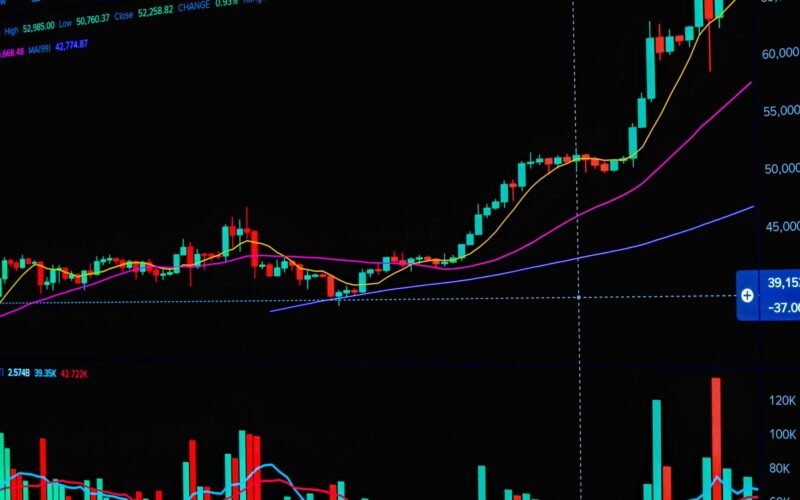
Volume is a critical confirmation tool. A gap accompanied by significantly higher trading volume than the average is considered more reliable and likely to lead to a sustained move. For instance, a breakaway gap on the Nifty 50 with above-average volume suggests strong conviction from market participants.
Support and Resistance Levels
Traders look for gaps that occur near significant support or resistance levels. A gap breaking through a key resistance level, especially with high volume, can signal a bullish continuation. Conversely, a gap below a support level might indicate further downside.
Chart Patterns and Candlestick Formations
The context of chart patterns and accompanying candlestick formations around the gap can provide further clues. A bullish engulfing pattern forming after a gap up, or a bearish harami after a gap down, can strengthen the trading signal.
Using Technical Indicators
Technical indicators like the Relative Strength Index (RSI), Moving Average Convergence Divergence (MACD), or Bollinger Bands can help confirm the strength or weakness of the price move following a gap. For example, an RSI reading above 70 after a gap up might suggest overbought conditions, while a MACD crossover can confirm momentum.
How to Implement a Gap Trading Strategy
Implementing a gap trading strategy involves a systematic approach, from identifying the gap to managing the trade and its associated risks.
- Identify the Gap: Scan the market at the opening bell for stocks or indices (like Nifty or Bank Nifty) that have gapped significantly from the previous day’s close.
- Determine Gap Type: Analyse the volume and the surrounding price action to classify the gap (Breakaway, Runaway, Exhaustion, or Common).
- Seek Confirmation: Wait for confirmation signals. For a bullish gap trade, look for a bullish candlestick pattern and increasing volume after the open. For a bearish gap, look for bearish patterns and volume.
- Define Entry Point: Enter a long position if confirmation suggests the gap will hold and price will move higher, or a short position if the gap indicates a potential decline. Often, traders enter on a small pullback towards the gap area after initial confirmation.
- Set Stop-Loss: Place a stop-loss order just below the low of the gap candle for a long trade, or just above the high of the gap candle for a short trade, to limit potential losses.
- Determine Profit Target: Targets can be set based on previous resistance/support levels, Fibonacci retracements, or by trailing the stop-loss as the price moves in your favour. For gaps that are expected to be filled, the target is the previous day’s closing price.
- Review and Adjust: Continuously monitor the trade and adjust stop-losses to lock in profits as the price moves favourably. Exit the trade if the market shows signs of reversing against your position.

Gap and Go Strategy
A popular variation is the ‘Gap and Go’ strategy, which aims to capture immediate momentum after a significant gap, often seen with strong news-driven openings. Entry is aggressive, typically right after the first few minutes of trading, with a tight stop-loss.
Gap Fill Strategy
This strategy bets on the common gap tendency to be filled. Traders look for gaps that appear less significant or occur within a range, expecting the price to retrace and cover the gap. The entry often occurs after signs of indecision or a slight reversal near the gap’s edge.
Risks and Considerations in Gap Trading
While gap trading can be profitable, it comes with inherent risks that must be carefully managed.
False Gaps
Not all gaps are created equal. Some gaps, particularly common gaps or those on low volume, may be ‘false’ and get filled quickly, leading to losses if a trade is entered prematurely or without proper confirmation. This is a common pitfall for new traders.
Market Volatility
Indian markets, especially sectors like commodities (MCX) or highly speculative stocks, can experience significant volatility. Sudden news or sentiment shifts can cause gaps to widen unexpectedly, hitting stop-losses or causing larger-than-anticipated losses.
Overtrading
The allure of quick profits from gaps can lead to overtrading. It’s essential to be selective and only trade high-probability setups, rather than chasing every gap that appears.

Psychological Factors
Fear of missing out (FOMO) or the urge to immediately recoup losses can lead to impulsive decisions. Sticking to a pre-defined trading plan and risk management rules is paramount.
Frequently Asked Questions
What is the best time to trade gaps in India?
The opening hour of the Indian stock market (9:15 AM to 10:15 AM IST) often presents the most significant gaps and volatility, making it a prime time for gap traders. However, gaps can also form and be traded later in the session.
Are gaps always filled?
No, gaps are not always filled. While many gaps tend to be filled over time, breakaway and runaway gaps, which signal strong trends, may never be filled or take a very long time to fill.
Which stocks are best for gap trading?
Stocks with higher liquidity and volatility, such as those in the Nifty 50 or Nifty Bank index, or actively traded mid-cap stocks, are generally better suited for gap trading due to sufficient volume and price movement.
What is a ‘gap and go’ strategy?
The ‘Gap and Go’ strategy involves entering a trade immediately after a significant gap occurs and the price shows initial momentum in the direction of the gap, aiming to capture the early part of a strong trend.
How do I set a stop-loss for a gap trade?
A common method is to place the stop-loss just beyond the opposite extreme of the gap candle. For a gap up, place it below the low of the opening candle; for a gap down, place it above the high of the opening candle.
Is gap trading suitable for beginners?
Gap trading requires a good understanding of technical analysis and risk management. While it offers opportunities, beginners should start with paper trading or very small positions after thorough study, perhaps using a custom TradingView indicator for assistance.
Key Takeaways:
- Price gaps represent significant market sentiment shifts and offer trading opportunities.
- Understanding gap types (Common, Breakaway, Runaway, Exhaustion) is crucial for strategy selection.
- High volume accompanying a gap increases its reliability.
- Confirmation through chart patterns and technical indicators is essential.
- A strict risk management plan with defined stop-losses and profit targets is mandatory.
- Be aware of false gaps and market volatility, especially in Indian exchanges.
- Discipline and adherence to strategy are key to successful gap trading.
Trading in the Indian stock market involves risks, and past performance is not indicative of future results. Consult with a SEBI-registered advisor before making any investment decisions.






 Finovatives