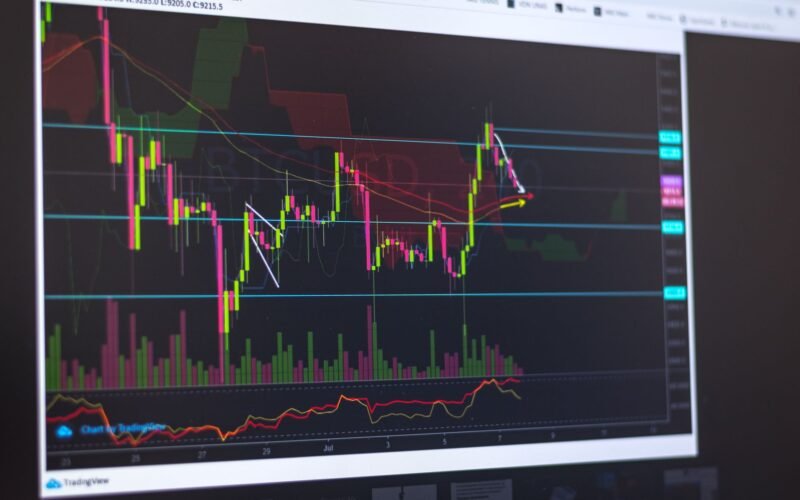



TL;DR: Effective position sizing for Indian stock traders involves calculating the appropriate number of shares or contracts to trade based on risk tolerance, account size, and stop-loss level, ensuring no single trade jeopardises the entire capital.
Key Stats at a Glance:
- Nifty 50’s average daily traded volume: Over 20 crore shares (as of recent data)
- SEBI mandates risk disclosure for all investment products.
- Average retail trading account size in India: Estimated between ₹50,000 – ₹2,00,000.
- A 1% stop-loss on a ₹1,00,000 account means ₹1,000 risk per trade.
- Indian equity derivatives market sees billions in turnover daily.
What is Position Sizing?
Position sizing is the process of determining how many units of a particular security to buy or sell in order to best manage the risk of a trade. It’s about deciding how much capital to allocate to a single trade, ensuring that a losing trade doesn’t wipe out a significant portion of your trading account.
The Cornerstone of Risk Management
In the dynamic Indian stock market, where volatility can be both a friend and foe, position sizing is arguably the most critical component of a trader’s risk management framework. It directly dictates how much you can afford to lose on any given trade, thereby protecting your capital from severe drawdowns.
Why It Matters More Than Entry/Exit Points
While finding the perfect entry and exit points is often the focus, a poorly sized position can quickly turn a technically sound trade into a financial disaster. Conversely, even a mediocre trade can be managed effectively with proper position sizing, limiting losses and allowing you to stay in the game longer.

The goal isn’t to predict the future perfectly, but to survive and thrive by controlling the downside. SEBI’s emphasis on risk mitigation for investors further underscores the importance of such disciplined approaches.
How Does Position Sizing Work?
Position sizing works by using predefined rules to calculate the quantity of a financial instrument to trade, typically based on the trader’s risk tolerance per trade, the distance to their stop-loss, and the total capital available in their trading account.
The Core Formula
The fundamental principle can be expressed as:
Trade Size (in units) = (Account Capital x Risk Percentage per Trade) / (Stop-Loss in ₹ per unit)
Let’s break this down:
- Account Capital: The total amount of money in your trading account.
- Risk Percentage per Trade: The maximum percentage of your account you are willing to risk on a single trade (e.g., 1%, 2%). This is a crucial personal risk management decision.
- Stop-Loss in ₹ per unit: The difference between your entry price and your stop-loss price, expressed in currency value per share or unit.
Example Calculation
Suppose you have ₹1,00,000 in your trading account and decide to risk only 1% per trade. You identify a stock, say Reliance Industries (RIL), with a current price of ₹2,900. You plan to set your stop-loss at ₹2,850. The risk per share is ₹50 (₹2,900 – ₹2,850).
1. Risk Amount: 1% of ₹1,00,000 = ₹1,000.
2. Trade Size: ₹1,000 / ₹50 per share = 20 shares.
So, you would buy 20 shares of RIL, risking ₹1,000 (₹50 x 20) on this trade. If the stop-loss is hit, you lose ₹1,000, which is 1% of your capital. This disciplined approach ensures that even a string of losses won’t devastate your account.
Popular Position Sizing Strategies for Indian Traders
Different traders prefer different methods depending on their risk appetite and trading style. Here are some widely adopted strategies in the Indian stock market:

1. Fixed Fractional Position Sizing
This is perhaps the most popular method. You risk a fixed percentage of your trading capital on each trade. As your capital grows, the amount you risk also grows proportionally, and vice versa. This allows for capital preservation during drawdowns and participation in growth during profits. Most sophisticated trading tools, including advanced TradingView indicators, can help automate these calculations.
2. Fixed Dollar Amount Position Sizing
Here, you risk a fixed monetary amount on each trade, regardless of your total account balance. For example, you might decide to risk ₹2,000 per trade. While simpler to implement, it doesn’t scale with your account growth or shrinkage as effectively as the fractional method.
3. Volatility-Based Position Sizing (ATR Method)
This strategy accounts for the instrument’s volatility. It uses the Average True Range (ATR) indicator to determine the stop-loss distance in terms of price. A higher ATR suggests higher volatility, meaning a wider stop-loss in points but a smaller position size to keep the monetary risk constant. Conversely, lower volatility allows for a larger position size.
4. Risk-Adjusted Position Sizing
This is a more advanced approach that considers not only the stop-loss distance but also the perceived probability of the trade succeeding. It involves adjusting the position size based on factors like chart patterns, indicator signals, and your confidence level in the trade setup.
5. 1% Rule / 2% Rule
This is a simplified version of the fixed fractional method, specifically focusing on risking either 1% or 2% of your capital per trade. It’s easy to remember and implement, making it a favourite among beginners.
How to Implement Position Sizing in Your Trading
Successfully integrating position sizing into your trading routine requires discipline and a systematic approach. Here’s a practical guide:
- Determine Your Total Trading Capital: Identify the exact amount of money you are willing to risk in the stock market. Do not include funds needed for essential living expenses.
- Define Your Risk Per Trade: Decide on a conservative percentage of your total capital you are willing to lose on any single trade (e.g., 1% or 2%). For beginners, starting with 1% is highly recommended.
- Set Your Stop-Loss: Before entering any trade, clearly define your stop-loss level based on technical analysis (e.g., below a support level, above a resistance level, or based on ATR). This stop-loss must be realistic and based on market structure, not just an arbitrary number.
- Calculate the Risk Amount in Rupees: Multiply your total trading capital by your chosen risk percentage per trade. (e.g., ₹1,00,000 capital x 1% risk = ₹1,000 risk amount).
- Calculate the Risk Per Unit: Determine the difference between your intended entry price and your stop-loss price in currency terms per share/unit. (e.g., Entry ₹150, Stop-Loss ₹145 => Risk per unit = ₹5).
- Calculate Your Position Size: Divide the total risk amount in rupees by the risk per unit. (e.g., ₹1,000 / ₹5 = 200 units). This is the maximum number of shares/contracts you should trade.
- Execute the Trade with the Calculated Size: Stick strictly to the calculated position size. Avoid the temptation to increase it based on gut feeling or ‘hot tips’. Your trading platform or a custom TradingView indicator can assist here.
- Review and Adjust Regularly: As your capital grows or shrinks, recalculate your position size accordingly. Adjust your risk percentage if your circumstances or risk tolerance change.

Consistency is key. Applying these steps diligently, day after day, is what builds robust risk management habits.
Common Pitfalls to Avoid
Even with a clear understanding of position sizing, traders often stumble. Being aware of these common mistakes can help you steer clear:
- Over-leveraging: Using excessive leverage (especially in futures and options) without proper position sizing can lead to rapid and substantial losses.
- Ignoring Stop-Losses: Failing to set or adhere to stop-loss levels negates the entire purpose of position sizing.
- Inconsistent Risk Percentage: Varying the risk percentage wildly from trade to trade introduces unpredictability and undermines capital preservation.
- Trading Too Large After Wins: Letting a few winning trades inflate your position size too quickly, leading to significant losses when the next inevitable drawdown occurs.
- Emotional Trading: Letting fear or greed dictate trade size instead of sticking to the predefined strategy.
The Psychological Edge
Proper position sizing provides a crucial psychological buffer. Knowing that you’ve pre-determined the maximum loss on a trade allows you to focus on executing your strategy rather than worrying about potential financial ruin. This clarity is invaluable in the high-pressure environment of the stock market.
Position Sizing in Futures & Options (F&O)
Position sizing in the F&O segment of the Indian market, while based on the same principles, involves additional complexities due to leverage and the time-decay (theta) of options. The ‘Risk Per Unit’ calculation often involves the premium paid for options or the margin required for futures, adjusted for the stop-loss level.
Understanding Margin and Leverage
Futures and options inherently involve leverage, which magnifies both potential profits and losses. Therefore, applying a strict risk percentage (like 1-2%) to the total margin blocked or the notional value is paramount. A common mistake is sizing F&O trades based on the premium alone, ignoring the potential for much larger losses due to leverage or adverse price movements beyond the premium.
Options Specifics
For options buyers, the maximum loss is typically the premium paid. However, a stop-loss can still be beneficial to exit a losing trade before the entire premium erodes due to time decay or adverse price action. For options sellers, the risk can be theoretically unlimited (for uncovered calls) or substantial, making position sizing even more critical. Often, risk is capped by setting a maximum loss amount or a stop-loss based on the underlying asset’s price movement.

Frequently Asked Questions
What is the most common position sizing method used by Indian traders?
The Fixed Fractional method, where traders risk a consistent percentage (e.g., 1-2%) of their capital per trade, is the most popular due to its scalability and capital preservation benefits.
Should I use the same position size for all my trades?
No, your position size should ideally be recalculated for each trade based on your current capital, your defined risk percentage, and the specific stop-loss distance for that particular trade.
How does leverage affect position sizing?
Leverage magnifies potential gains and losses. When using leverage (common in F&O), position sizing becomes even more critical to ensure that a adverse move doesn’t result in losses exceeding your predefined risk tolerance.
Can I use position sizing for intraday trading?
Absolutely. Position sizing is crucial for intraday trading to manage risk within a single trading session and prevent large losses from accumulating quickly.
What is a good risk percentage to start with?
For beginners, starting with a low risk percentage, such as 1% or even 0.5% of your trading capital per trade, is highly recommended to build experience and confidence while limiting potential damage.
Key Takeaways
- Position sizing is a fundamental risk management technique for all Indian stock market traders.
- It determines the appropriate quantity of shares or contracts to trade to protect capital.
- Popular strategies include Fixed Fractional, Fixed Dollar, and Volatility-Based sizing.
- The core principle involves calculating trade size based on account capital, risk percentage, and stop-loss distance.
- Consistent application and adherence to a chosen strategy are vital for long-term trading success.
- Understanding position sizing is crucial, especially when trading leveraged instruments like futures and options.
Trading in the stock market involves significant risk, and past performance is not indicative of future results. Always conduct your own research and consult with a qualified financial advisor before making any investment decisions.






 Finovatives