



TL;DR: Effective NSE swing trading strategies involve identifying stocks with clear trends and using technical indicators like Moving Averages and RSI to time entries and exits for short-to-medium term gains, focusing on risk management.
Key Stats at a Glance:
- Nifty 50’s average daily trading volume: Over 15 crore shares (approx.)
- BSE Sensex market capitalization: Over ₹400 lakh crore (approx.)
- Average swing trade holding period: 2 days to 4 weeks
- SEBI mandate: Most listed Indian stocks are eligible for F&O trading, offering hedging opportunities
- NSE Cash Segment: Features over 4,000+ listed instruments
What is Swing Trading on the NSE?
Swing trading on the NSE is a strategy focused on capturing price swings (or ‘swings’) that occur over a period of days to weeks, aiming to profit from both upward and downward price movements within established trends.
Swing trading occupies a middle ground between day trading, which aims to profit from small intraday movements, and long-term investing, which holds positions for months or years. The core idea is to ride a ‘swing’ in the price of a stock. Indian retail traders often find this approach appealing because it doesn’t require constant screen monitoring like day trading, yet it offers more frequent profit opportunities than buy-and-hold investing. The National Stock Exchange (NSE) provides a vast universe of stocks across various sectors, making it an ideal playground for swing traders.
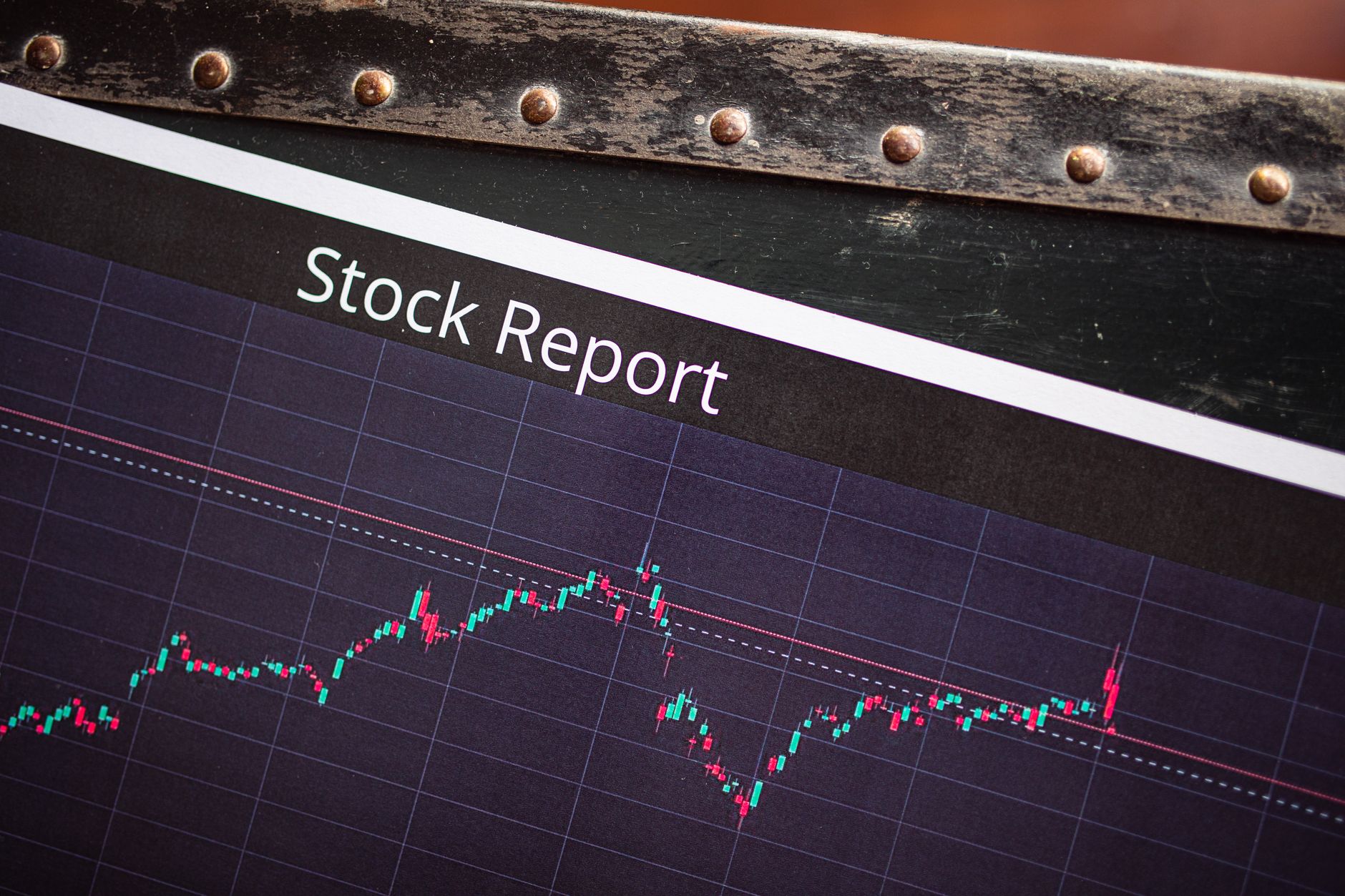
This strategy relies heavily on technical analysis to identify potential trade setups. Swing traders look for patterns and indicators that suggest a stock is likely to move significantly in one direction over the next few days or weeks. They aim to enter a trade when a trend is starting or shows signs of continuation and exit before the trend reverses or stalls.
How do Swing Traders Identify Profitable NSE Stocks?
Swing traders identify profitable NSE stocks by analysing price charts and using technical indicators to spot stocks exhibiting clear trends, potential reversals, or consolidation patterns that are likely to break out.
The process involves a combination of screening and analysis. Traders use stock screeners, often available through brokerage platforms or dedicated financial websites, to filter stocks based on criteria like trading volume, price action, and sector performance. Once a watchlist is compiled, detailed chart analysis takes precedence. This is where the real magic happens for a swing trader looking for that next big move in instruments listed on the NSE.
Trend Identification
The foundational element of successful swing trading is identifying stocks that are already in a discernible trend – either an uptrend or a downtrend. Uptrends are characterised by higher highs and higher lows, while downtrends feature lower highs and lower lows. Tools like trendlines and moving averages are invaluable here. For example, a stock trading consistently above its 50-day and 200-day moving averages on a daily chart is generally considered to be in an uptrend.
Chart Patterns
Recognising common chart patterns can signal potential continuation or reversal. Patterns like flags, pennants, triangles (ascending, descending, symmetrical), head and shoulders, and double tops/bottoms are frequently studied. These patterns represent periods of consolidation or indecision within a larger trend, often preceding a significant price move. Understanding these visual cues is paramount for a swing trader.
Volume Analysis
Volume, the number of shares traded during a specific period, provides crucial confirmation for price movements. An increase in volume accompanying a breakout from a pattern or a strong directional move suggests conviction from market participants. Conversely, a breakout on low volume might be a false signal. High volume during trend continuations reinforces the trend’s strength.
Volatility Assessment
Swing trading thrives on volatility – the degree of price fluctuation. Stocks that move too little offer few profitable opportunities. Traders look for stocks that exhibit enough price movement within the desired timeframe (days to weeks) to make a trade worthwhile. Tools like the Average True Range (ATR) can help quantify a stock’s volatility.
Popular Swing Trading Strategies for the Indian Market
Popular swing trading strategies for the Indian market include breakout trading, moving average crossovers, and pullback strategies, each leveraging specific technical indicators and chart patterns to profit from short-to-medium term price movements.
These strategies are designed to be practical for traders operating in the dynamic NSE environment. They can be adapted based on market conditions and individual risk tolerance. Many traders find that integrating a robust TradingView indicator can significantly enhance their ability to spot these setups.

Breakout Trading
This strategy involves identifying periods of price consolidation where a stock’s price is trading within a defined range (e.g., a triangle or rectangle pattern). The trade is initiated when the price decisively breaks out of this range, signalling the potential start of a new trend. Entry typically occurs on the breakout candle or on a subsequent retest of the broken resistance/support level. Stop-losses are usually placed just below the breakout level for long trades or above for short trades.
Moving Average Crossovers
Moving averages (MAs) smooth out price data to create a single flowing line, making it easier to identify the direction of a trend. A common strategy uses two MAs, typically a shorter-term MA (e.g., 20-day) and a longer-term MA (e.g., 50-day). A buy signal is generated when the shorter-term MA crosses above the longer-term MA, indicating potential upward momentum. A sell signal occurs when the shorter-term MA crosses below the longer-term MA, suggesting downward momentum. This is a widely followed approach on the NSE.
Pullback/Retracement Strategy
In an existing uptrend, a pullback strategy aims to buy the stock when its price temporarily dips or ‘pulls back’ towards a support level or a moving average. The assumption is that the underlying uptrend will resume after the brief correction. Traders look for bullish candlestick patterns (like hammers or bullish engulfing) near the support level to confirm potential buying interest. Conversely, in a downtrend, traders might short sell during a rally (an upward pullback) towards a resistance level.
Relative Strength Strategy
This strategy focuses on identifying stocks that are outperforming the broader market (like the Nifty 50 or BSE Sensex). Traders look for stocks that are making new highs while the market is flat or declining, or stocks that show strong upward momentum within a bullish market. This is based on the principle that strong stocks tend to get stronger. Sector analysis is also key here, looking for leading sectors within the NSE.
How to Implement a Swing Trading Strategy
- Choose Your Strategy: Select a swing trading strategy that aligns with your risk tolerance and trading style (e.g., breakout, pullback).
- Select Your Timeframe: Decide on the charts you will use (e.g., daily and 4-hour charts are common for swing trading).
- Screen for Stocks: Use a stock screener to find stocks that meet your strategy’s criteria (e.g., above 50-day MA, showing consolidation).
- Analyse Charts: Apply technical indicators (Moving Averages, RSI, MACD) and identify chart patterns on your chosen stocks.
- Define Entry and Exit Points: Determine precise entry levels, stop-loss levels (to limit potential losses), and profit targets based on your strategy and technical analysis.
- Manage Risk: Never risk more than 1-2% of your trading capital on any single trade. Use appropriate position sizing.
- Execute the Trade: Place your buy/sell order with your broker, ensuring your stop-loss is set.
- Monitor and Adjust: Track the trade’s progress and adjust your stop-loss (e.g., to breakeven or trail) as the trade moves in your favour, but avoid tinkering with your profit target unless a clear reversal signal appears.

Risk Management in Swing Trading
Effective risk management is crucial for swing traders to protect their capital and ensure long-term survival in the volatile Indian stock market, regardless of the specific strategy employed.
Swing trading, while potentially rewarding, carries inherent risks. The short-to-medium term nature means positions can be exposed to overnight gaps or sudden market shifts. Therefore, implementing robust risk management techniques is not optional; it’s a necessity. This includes the disciplined use of stop-losses, appropriate position sizing, and avoiding emotional decision-making. The goal is to ensure that losses are limited and do not significantly impact the overall trading account. Many traders find using a tool like the Trend Traders Tool can help identify potential risks before entering a trade.
Stop-Loss Orders
A stop-loss order is an instruction to your broker to automatically close a losing trade at a specific price. For a long position, the stop-loss is set below the entry price; for a short position, it’s set above. This pre-defined exit point prevents emotional decisions and limits the maximum potential loss on any single trade. It’s a cornerstone of responsible trading on exchanges like the NSE.
Position Sizing
Position sizing involves determining how many shares or contracts to trade based on your stop-loss distance and the percentage of your capital you’re willing to risk. A common rule is to risk no more than 1-2% of your total trading capital per trade. For example, if you have ₹1,00,000 in your account and are willing to risk 1%, that’s ₹1,000 per trade. If your stop-loss is ₹2 away from your entry price, you can trade a maximum of 500 shares (₹1,000 / ₹2).
Diversification (Limited)
While swing traders often focus on a few high-conviction setups, some level of diversification across different stocks or even sectors can mitigate risk. However, over-diversification can dilute focus and make it difficult to manage trades effectively. The key is to spread risk without sacrificing concentration on quality setups.
Profit Targets
Just as important as setting stop-losses is defining profit targets. These are pre-determined price levels where a swing trader aims to exit a winning trade. Targets can be based on technical analysis (e.g., resistance levels, Fibonacci extensions) or a fixed risk-reward ratio (e.g., aiming for 2:1 or 3:1 profit relative to the stop-loss distance).
Frequently Asked Questions
What is the ideal holding period for a swing trade?
Swing trades are typically held for a few days to a few weeks. The goal is to capture a significant price move (‘swing’) that occurs over this intermediate timeframe, rather than very short-term intraday fluctuations or long-term investment growth.
Which indicators are best for NSE swing trading?
Popular indicators include Moving Averages (50-day, 200-day), Relative Strength Index (RSI), MACD, and Bollinger Bands. These help identify trends, momentum, overbought/oversold conditions, and volatility.
Is swing trading suitable for beginners in India?
Yes, swing trading can be more manageable for beginners than day trading as it requires less screen time. However, it still demands discipline, a solid understanding of technical analysis, and strict risk management.
How much capital is needed for swing trading?
While you can start with smaller amounts, a capital of at least ₹25,000 to ₹50,000 is often recommended to effectively implement position sizing and manage brokerage costs on the NSE.
Can I swing trade options on the NSE?
Yes, swing trading strategies can be applied to NSE options. However, options trading involves higher risk and complexity due to factors like time decay (theta) and implied volatility, requiring advanced knowledge.
Key Takeaways:
- Swing trading aims to profit from price swings lasting days to weeks on the NSE.
- Identifying trends and using technical indicators like Moving Averages and RSI are key.
- Popular strategies include breakout trading, moving average crossovers, and pullback entries.
- Strict risk management, including stop-loss orders and proper position sizing, is crucial.
- Swing trading requires discipline and continuous learning, making it accessible but not risk-free.
Trading in the securities market is subject to market risks. Please read all the related documents carefully before investing.




 Finovatives